
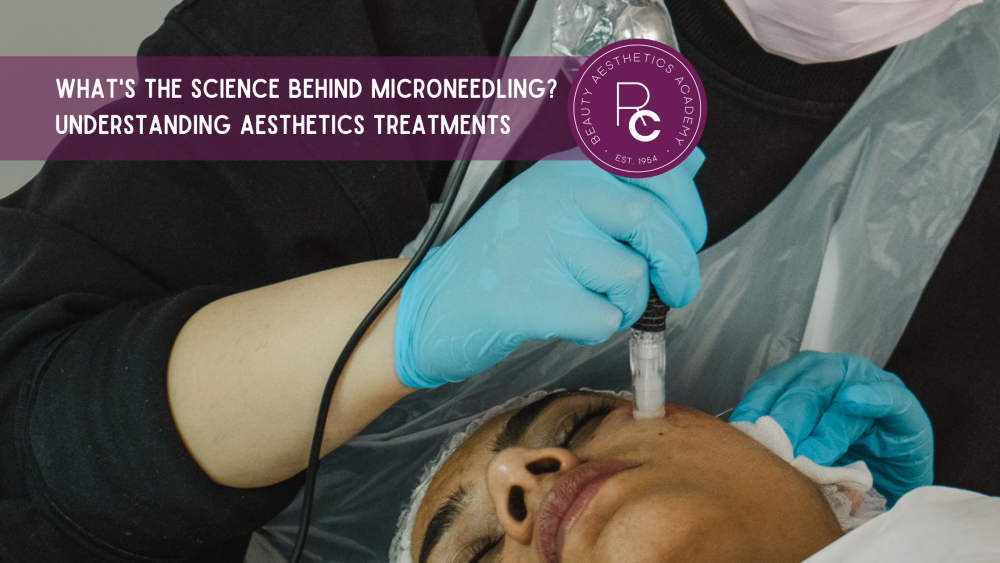
Microneedling creates a controlled pattern of microchannels, which starts a wound-healing response. For an aesthetic practitioner, the useful science lies in how the epidermis, dermis, inflammatory signals, fibroblasts and extracellular matrix interact over time. Technique can support or disrupt that process.
The sections below explain the biology behind conventional microneedling. For client information about benefits, side effects and aftercare, read What Is Microneedling?
Which layers of the skin matter in microneedling?
The epidermis forms the skin’s outer barrier. Beneath it, the dermis contains collagen, elastin, fibroblasts, blood vessels, nerves and other structures. Microneedling devices can be adjusted to different depths, but a number on a device is not a guarantee of the depth reached in tissue. Pressure, angle, speed, cartridge design, skin thickness and treatment area all affect penetration.
Practitioners therefore need a working knowledge of anatomy and physiology alongside any “depth chart”. Skin thickness and risk vary across the forehead, cheeks, nose and body. The aim is to create a controlled stimulus that suits the indication, rather than to reach the deepest possible endpoint.
How do controlled microchannels trigger healing?
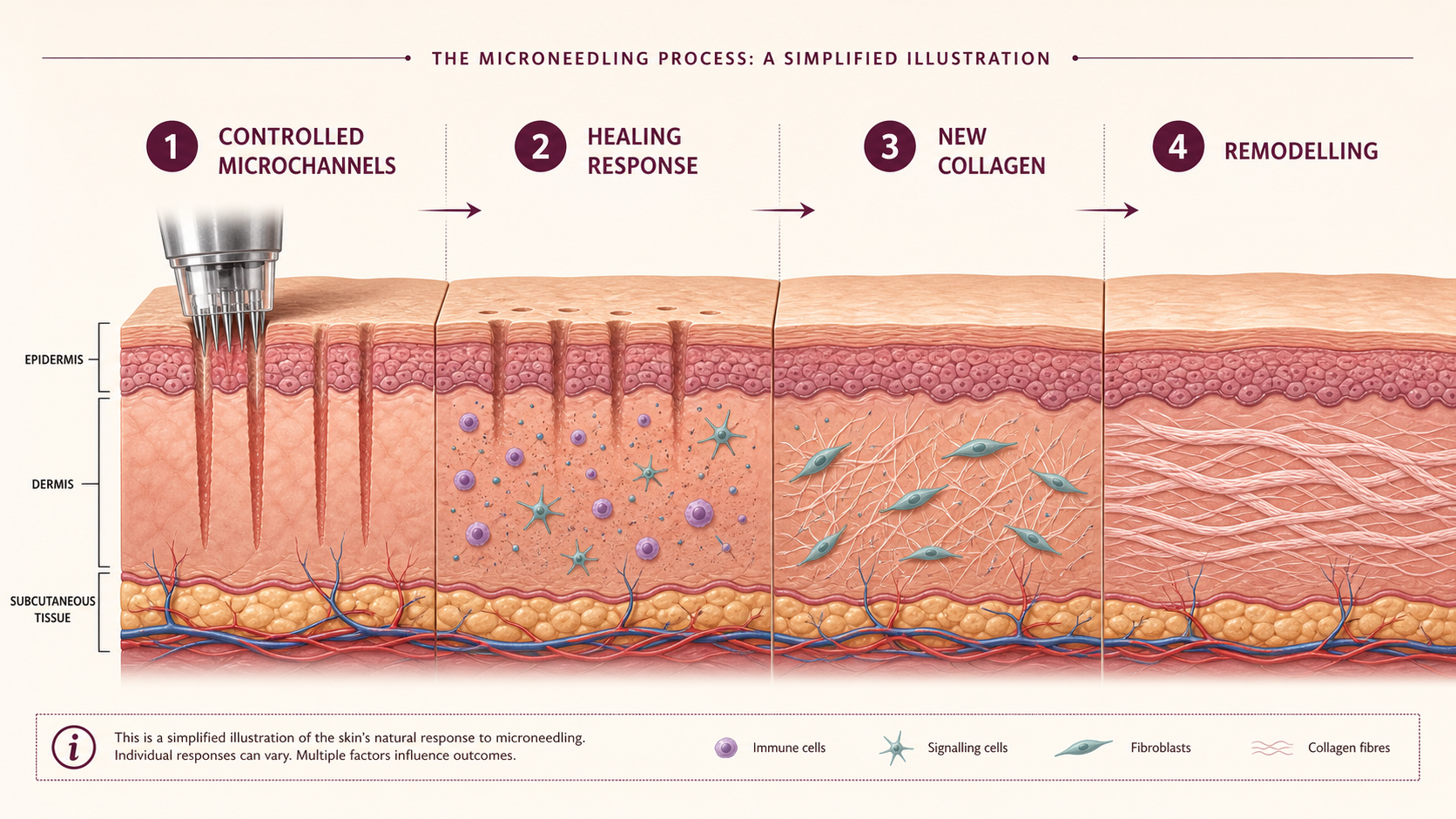
Conventional microneedling creates repeated, small punctures while leaving much of the surrounding tissue intact. The response is often described in stages, but those stages overlap rather than starting and stopping on exact days.
1. Haemostasis and early signalling
Where living tissue is reached, the body acts to limit bleeding and stabilise the area. Platelets and local cells release signals involved in the repair process. The visible treatment endpoint must still be proportionate; excessive bleeding is not proof of a better procedure.
2. Inflammation
Immune and signalling cells help clear damaged material and coordinate repair. A short inflammatory response is part of healing, but uncontrolled or prolonged inflammation can increase risk. Treating active infection or highly inflamed skin can compound the problem rather than improve it.
3. Proliferation and matrix formation
Fibroblasts contribute to new extracellular-matrix components, including collagen. Keratinocytes support restoration of the epidermal barrier, while vascular and cellular activity supports the recovering tissue. This biological phase explains why clients need time between appropriately planned sessions.
4. Collagen remodelling
Newly produced matrix is reorganised and matured over weeks and months. Early collagen is not the same as fully remodelled tissue. The result is gradual, and clinical photographs should be taken under consistent lighting and timing to avoid mistaking temporary swelling for improvement.
What is collagen induction therapy?
“Collagen induction therapy” is another name commonly used for microneedling. It describes the intention to stimulate a controlled repair response that supports collagen production and organisation. The term should not be used as a guarantee that every client will produce the same amount of collagen or achieve the same visible result.
Collagen provides tensile strength and structural support in the dermis. Elastin contributes to recoil, while glycosaminoglycans and other matrix components influence hydration and tissue behaviour. Healthy-looking skin depends on the system as a whole, not collagen alone.
What evidence supports microneedling?
Clinical use and published research support microneedling for selected concerns, particularly the appearance of facial acne scars, with evidence also developing for wrinkles and some scars. Outcomes vary across studies because devices, needle settings, treatment schedules and assessment methods differ. The FDA’s microneedling-device information notes authorised uses for certain devices and also lists common and less common risks.
A practitioner should therefore match claims to the device, evidence and client rather than generalising from one study to every microneedling treatment. Hair restoration, product delivery and treatment combinations require separate evidence and scope considerations.
Why does treatment planning affect the biological response?
A safe plan balances stimulus with recovery. Key variables include:
- Indication: acne scarring, texture and fine lines do not require identical protocols.
- Anatomical area: tissue thickness and underlying structures change across the face and body.
- Skin history: inflammation, pigment response, previous scarring and healing history influence risk.
- Device and cartridge: use must follow the manufacturer’s intended purpose and instructions.
- Technique: pressure, angle, passes and overlap influence trauma.
- Interval: treatment should allow sufficient recovery and reassessment.
- Aftercare: barrier support, sun protection and avoidance of irritants affect recovery.
Why is infection control central to microneedling science?
Creating microchannels temporarily compromises the skin barrier. The procedure therefore requires a new sterile, single-use cartridge, correct hand hygiene, clean preparation, safe disposal and appropriate environmental controls. Products intended for intact skin may not be suitable for use on a disrupted barrier.
Practitioners also need a plan for recognising and escalating complications. Increasing pain, spreading redness, heat, discharge, systemic symptoms or delayed healing should not be dismissed as routine “purging”.
How is standard microneedling different from RF microneedling?
Standard microneedling creates mechanical microchannels. Radiofrequency microneedling delivers thermal energy through needles and introduces additional variables and risks. It requires device-specific education and should not be treated as a simple upgrade of the same procedure. In 2025, the FDA issued a safety communication about serious complications reported with certain RF microneedling uses.
What should a microneedling practitioner be able to explain?
A competent practitioner should be able to explain why a client is or is not suitable, the intended endpoint, realistic benefits, foreseeable side effects, alternatives and the signs that need review. Pigmentation disorders, active acne, scars and unexplained lesions each need an appropriate assessment. Increasing the device setting is not a substitute for that assessment.
How can I learn microneedling professionally?
Ray Cochrane Beauty Aesthetics Academy currently teaches skin needling within the VTCT Skills Level 4 Certificate in Advanced Aesthetic Therapies for Skin Rejuvenation. The Ofqual-regulated qualification combines practical treatment skills with consultation, dermatological science, professional practice and superficial chemical peels. Check the live course page for current entry requirements and delivery details.
The next regulated step is our VTCT Skills Level 5 Certificate in Non-Surgical Aesthetic Procedures for Skin Rejuvenation, which contains an advanced skin needling unit assessed at Level 6. Supervised training at Ray Cochrane may include depths up to 1.5 mm on the face and 2 mm on suitable body areas. A displayed depth is only one part of treatment planning and may not equal the depth reached in tissue. Learners must relate each setting to the anatomy, indication, skin response, device instructions, insurer limits and their assessed competence.
If you are comparing routes, our guide to UK microneedling qualifications, insurance and licensing explains the distinction between the current legal position, professional expectations and the proposed licensing scheme.
Frequently asked questions about microneedling science
Does more bleeding mean more collagen?
No. Bleeding is not a reliable measure of future collagen remodelling. A practitioner should use an appropriate clinical endpoint and device protocol, not maximise trauma.
Does collagen form immediately after treatment?
Repair signalling begins early, but matrix production and remodelling take time. Immediate plumpness may reflect temporary fluid and inflammation rather than mature collagen.
Can every topical product be used with microneedling?
No. Disrupting the barrier can change absorption and risk. Compatibility must be supported by the product’s intended use, evidence, training, insurance and treatment protocol.
This article is educational and does not replace device-specific training, manufacturer instructions, medical advice or a client-specific risk assessment.