Non-medical aesthetics is no longer a small part of the beauty world. It is now one of the fastest-growing areas, worth billions worldwide. Treatments like fillers, lasers, chemical peels, and mesotherapy have become mainstream, attracting new clients every day.
At Ray Cochrane Beauty Aesthetic Academy, we see this shift in our record enrolment numbers, advanced aesthetic courses, and new accredited options. But what is causing this growth, and why are non-medical treatments leading the way?
A Booming Aesthetics Industry
The global aesthetics market continues to expand rapidly, supported by:
- Improved technology
- Higher safety standards
- Greater client confidence
- Visible results without surgery
- Minimal downtime
Non-surgical procedures now make up the majority of cosmetic treatments, with clients choosing subtle enhancements that improve skin quality, soften signs of ageing, and fit around busy lifestyles.
As demand rises, so does the need for skilled, qualified practitioners—and regulation is beginning to catch up.
For years, non-surgical aesthetics in the UK has grown faster than regulation. But that’s changing.
A clear example can already be seen in Scotland, where the government is moving towards formal regulation through new legislation. The Non-Surgical Cosmetic Procedure Bill, currently progressing through the Scottish Parliament, aims to introduce consistent rules around:
- Who can carry out treatments
- Where treatments can be performed
- What level of training is required
The goal is simple: improve public safety, reduce unsafe practice, and professionalise the industry.
You can read more about our thoughts on the NSCP bill on our blog to find out what we think this will mean for the UK industry.
For students and those interested in pursuing aesthetics as a career, this is a crucial moment in which proper qualifications, accredited training, and a solid understanding of skin anatomy will soon be the baseline for clients and not a bonus.
Non-Surgical Treatments Overtaking Cosmetic Surgery
The rise of non-medical aesthetics mirrors a broader cultural shift away from invasive cosmetic surgery. Clients increasingly prefer treatments that offer natural-looking improvements with minimal risk and downtime.
Popular non-surgical treatments are favoured because they offer:
- Natural-looking results
- Low risk
- Minimal downtime
- Gradual, progressive improvement
This change in client behaviour reflects a broader shift in mindset. Instead of “fixing” ageing or skin concerns after they appear, many clients now take a preventative and maintenance-led approach. Regular, non-invasive treatments are used to support skin health over time, making aesthetics part of an ongoing self-care routine rather than a one-off intervention.
Celebrity culture and social media have also positively shaped public perception of aesthetic treatments. Social media influencers and celebrities have normalised non-surgical aesthetics by sharing treatments they regularly get, no longer claiming that their youthful and healthy skin is “natural” but admitting they have help in the form of non-medical aesthetic treatments.
From a practitioner’s perspective, this shift has reshaped the entire industry. Non-surgical treatments allow professionals to build long-term relationships with clients through treatment plans and ongoing care, rather than one-off procedures. This creates consistent demand, repeat business, and sustainable career pathways.
This evolution explains why training in non-medical aesthetic treatments is now at the centre of beauty education.
Record Enrolment and New course launches
At Ray Cochrane, this industry momentum and government regulations have translated into record enrolment across our regulated aesthetic courses. Students are no longer viewing aesthetics as a side hustle, but as a long-term career pathway with real earning potential.
They are no longer choosing informal training or one-day courses with unregulated practice. Instead, they are choosing providers like us with structured education courses, recognised awarding bodies, and clear professional standards. Rather than limiting opportunity, these changes actually strengthen the industry.
Regulation builds trust with clients, raises the profile of aesthetics as a legitimate career path, and ensures that those who invest in high-quality education are the ones who succeed long-term.
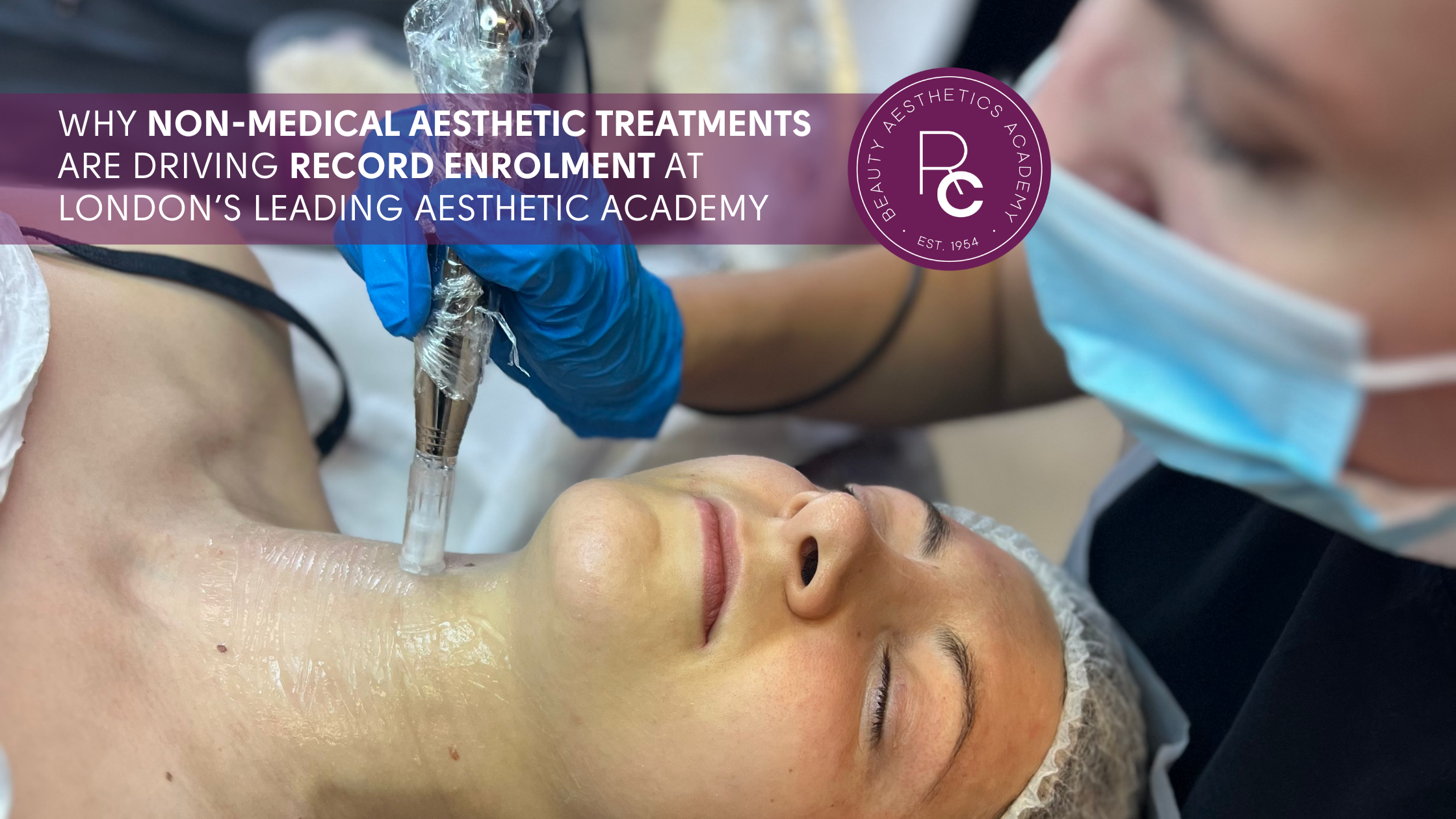
Courses in microneedling, skin rejuvenation, advanced facial treatments, and mesotherapy have seen especially high uptake, reflecting what clinics and clients are actively looking for.
Our academy’s focus on combining science-led education with hands-on practical training has made it a trusted choice for those serious about entering the field. In response to this growing demand and the changing regulatory landscape, we expanded our curriculum to ensure students have access to training that reflects the realities of the modern aesthetics industry.
In 2024/25, we launched the following courses after working closely with the awarding body VTCT:
- Level 3 Access to Aesthetics
- Level 4 Fibroblast Plasma Pen
- Chemical Peel and Microneedling Course – Level 4 & 5
- Level 5 Laser Tattoo Removal
- Level 5 Non-Surgical Aesthetic Course
- Level 6 Mesotherapy
We’re so proud to be working with VTCT in the rollout of more regulated aesthetic training. Our Education Director, Eleonora Androva, has lent her expertise in the beauty and aesthetic industry to the awarding body in expanding its portfolio to include a broader range of aesthetic and advanced skin courses. The courses reflect a wider industry reality: employers, insurers, and regulators are all demanding higher standards of education and competency.
Career Opportunities in Non-Medical Aesthetics
Aside from being a lucrative career, aesthetics continues to be a popular career choice due to the flexibility it offers. Qualified practitioners can work within clinics, salons, medical-led environments or go on to build their own aesthetic businesses.
Many professionals already working in the beauty industry are taking these aesthetic courses to increase their offerings to their clients, whilst others are newly transitioning into the industry.
We’re also seeing a growing interest in school leavers who view aesthetics as a modern, professional and respected industry. With aesthetic treatments having greater visibility on social media and more open conversations around treatments, aesthetic training feels accessible and aspirational in a way it never has before.
Importantly, today’s students are more well-informed and keen to research. They understand the importance of regulated qualifications, proper training and choosing an academy that prepares them not just for exams, but for real-world practice. This shift in mindset has played a significant role in the rise of structured, accredited aesthetic education.
We have some success stories from previous students who have gone on to open their own aesthetic businesses for you to check out:
- Ben Kelly’s Success Story – From Burn Victim to Laser Clinic Owner
- Sanna Mirzaa’s Success Story – Sanna Aesthetics
Why are the next generation of Aesthetic Practitioners choosing Ray Cochrane?
So many training providers are now offering aesthetic courses, and choosing where you train is just as important as choosing what you study. As the industry becomes more regulated and client expectations continue to rise, students need more than short courses or informal certificates: they need education that is credible, future-proof and respected across the industry.
This is where Ray Cochrane Beauty Aesthetic Academy stands apart.
With decades of experience in beauty education, Ray Cochrane has built a reputation for delivering high-quality, recognised training that aligns with real industry standards. Our non-medical aesthetic courses are designed with longevity in mind so that students can practice safely, confidently and professionally in a rapidly evolving sector.
One of the key reasons why students choose Ray Cochrane Beauty Aesthetics Academy is our science-led approach to aesthetics. We aren’t just teaching learners how to perform a treatment – we teach them why it works. From skin anatomy, consultation processes, contraindications and aftercare, our courses are focused on knowledge that supports better results and safer practices.
We are also proud to be among the first aesthetic training providers to offer regulated and accredited qualifications that reflect current and future industry requirements. As awarding bodies such as VTCT continue to align their qualifications with aesthetics, and government frameworks move towards stricter oversight, training with a recognised academy ensures students are not left behind. Our courses are designed to meet these expectations now rather than scramble to adapt later.
Finally, our record enrolment and expanded courses launch reflect the trust students place in our academy. Learners are choosing us as a long-term investment in their career as we offer the structure, reputation and educational depth needed to succeed.