
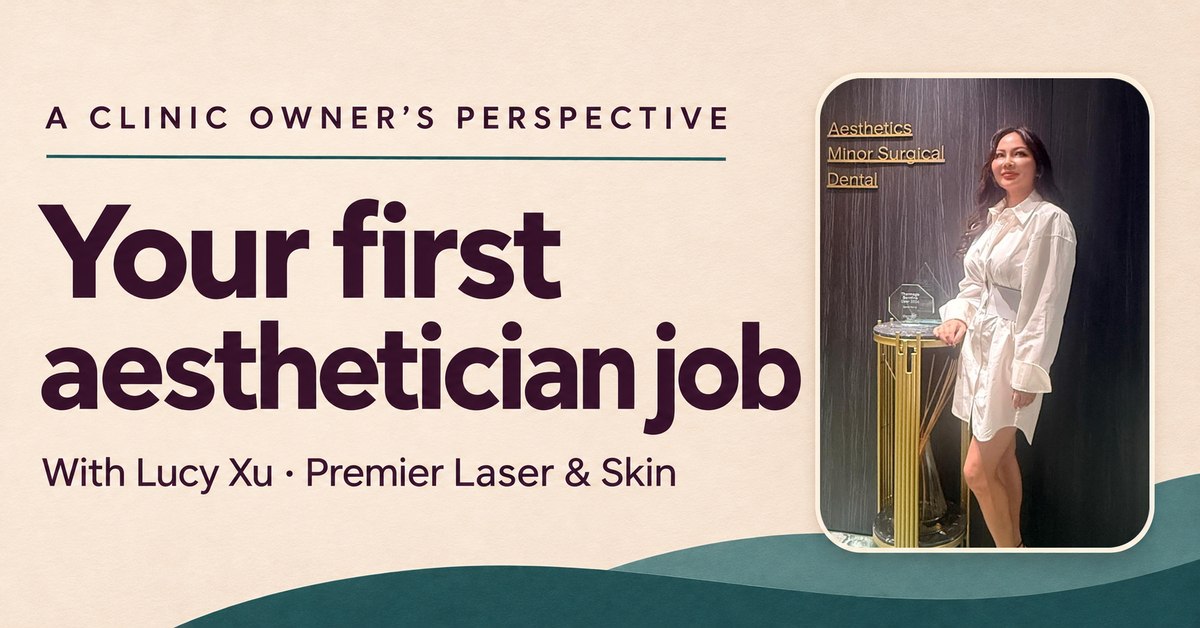
An employer’s perspective: introducing Lucy Xu
For this interview, Ray Cochrane Beauty Aesthetics Academy invited Lucy Xu, Founder and Director of Premier Laser & Skin, to share what she looks for when hiring an aesthetic practitioner.
We asked whether she would consider someone who has qualified but has not yet worked in a clinic.
Her answer was clear:
“We do recruit newly qualified aesthetic practitioners who have obtained the relevant qualifications but do not yet have industry employment experience.”
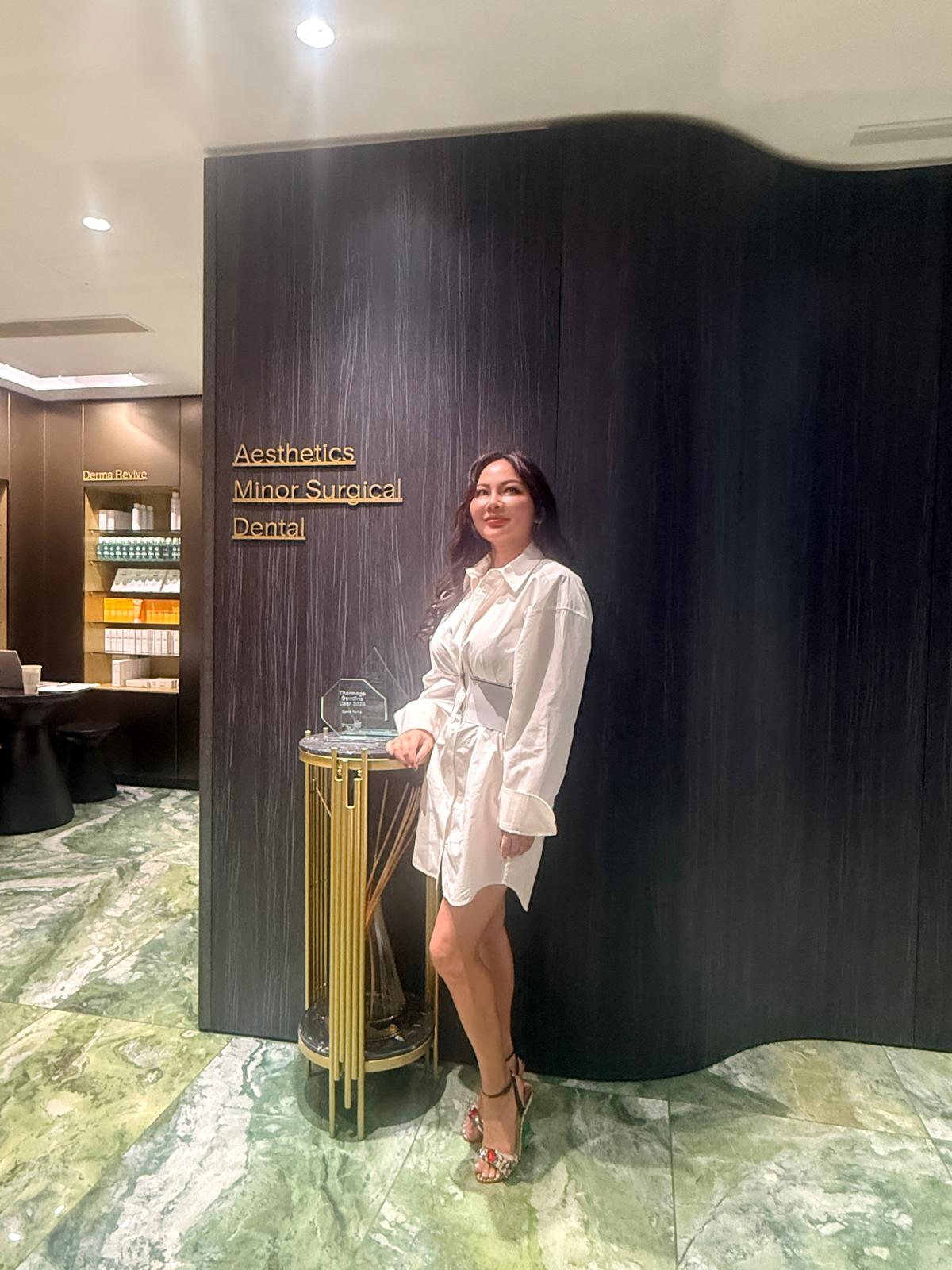
Lucy brings more than 20 years of hands-on experience in aesthetics, with particular expertise in advanced laser treatments, IPL and skin rejuvenation. Since co-founding Premier Laser in 2008, she has helped build a business spanning six clinics. She also founded Derma Revive Skin Clinic and developed her own skincare brand.
Derma Revive announced its win as Best London Clinic at the 2024 Safety in Beauty Diamond Awards. Lucy has also shared her expertise with Harper’s Bazaar, explaining the differences between IPL and laser hair removal.
She understands the work from both sides: delivering treatments and building the teams responsible for client care.
Our conversation covered qualifications, first jobs, professional attitudes and the support new practitioners need.
Her account gives students a practical view of a first clinic role and the support a new recruit may receive. It describes Premier Laser’s experience, rather than a promise of employment.
A new graduate who became a practice manager
Lucy shared the story of a practitioner she recruited shortly after qualifying.
The new recruit received additional training, spent time shadowing experienced colleagues and initially carried out a limited selection of treatments. As she developed, she applied what she learned to her work with clients and the wider business.
Over time, she progressed into a senior practitioner role and subsequently became a practice manager.
For Lucy, the reasons to give that first opportunity were motivation, willingness to learn and a commitment to progressing. She put particular emphasis on care:
“Above everything else, genuine care must be at the centre of their work because we are responsible for treating people’s skin.”
What interests me is the commitment on both sides. The clinic gave a new graduate training and time to develop. She put that support to use and took on more responsibility. Her story does not promise the same progression for everyone, but it helps explain why Lucy puts so much weight on attitude.
What an aesthetic practitioner does at Premier Laser
Premier Laser uses the job title "Aesthetic Practitioner". Lucy describes a role that begins with consultation and skin assessment, including the use of a skin-analysis machine.
Based on the client’s concerns, skin condition and desired outcome, practitioners recommend a tailored treatment plan. The clinic’s treatment range includes laser hair removal, laser tattoo removal, IPL skin rejuvenation, laser vein treatments, chemical and herbal peels, HydraFacial and other machine-based skin treatments.
After treatment, they record the session details and equipment settings on the clinic’s management platform. They also provide home-care and aftercare advice and may recommend appropriate post-treatment products.
This is the clinic’s wider treatment range. The treatments a new recruit performs depend on their qualifications, training and authorisation.
For students, that means practising consultations and record keeping alongside treatment techniques. You need to be able to explain a plan to a client and give clear aftercare advice.
Qualifications and training
Lucy says Premier Laser’s normal minimum qualification requirement is "NVQ Level 3".
By "NVQ Level 3", Lucy means an Ofqual-regulated Level 3 Beauty Therapy diploma, or an equivalent beauty therapy qualification accepted by the clinic. Check the exact diploma and what it covers; other Level 3 courses may cover different skills.
Lucy also notes that additional requirements can depend on the treatment and the clinic’s location. Applicants should check the requirements of the particular role rather than assume that one qualification covers every service.
Before choosing a course, ask how it prepares you for the work you want to do and what further training that role might require.
What helps an applicant stand out?
Lucy values reliability, honesty, attention to detail and teamwork. She also wants someone who can accept feedback.
She puts particular emphasis on listening. A practitioner needs to understand the client’s concerns, explain the recommendation and be honest about what treatment can achieve.
Before an interview, I suggest preparing a genuine example from supervised training: how you explained a treatment, responded to feedback or recognised that you needed your tutor’s help.
Learning continues after recruitment
Premier Laser provides additional training on its equipment through manufacturers’ trainers or authorised in-house trainers, according to Lucy.
Lucy explains that new practitioners normally shadow experienced colleagues for at least a week to become familiar with the equipment, treatment protocols and standards of client care. Where appropriate, they practise on suitable, consenting models under supervision.
An in-house trainer then assesses their readiness for independent work. Lucy describes checks that include technique, equipment settings, client care and treatment outcomes. Completing a week of shadowing is not, by itself, a sign-off to work independently.
Manufacturers’ trainers, in-house trainers and senior colleagues continue to provide support as practitioners develop. When considering a job, a new graduate can ask who will supervise them and how their work will be assessed.
A modern practitioner can also help educate clients
One detail in Lucy’s answers stood out to me: Premier Laser encourages practitioners to contribute to digital content.
For those comfortable appearing publicly, this can include educational and promotional material for platforms such as Instagram. Lucy sees content creation as a useful skill for a modern aesthetician.
Her answer does not present appearing on camera as a requirement for every applicant. She describes an opportunity for practitioners who are comfortable taking part.
I see a connection with the explanations students practise in class. If you can help a client understand a treatment, you are developing a skill that can also be useful in an educational video. For someone who enjoys this kind of communication, content creation could become part of their clinic work.
Commercial awareness includes honest advice
Lucy connects commercial awareness with knowledge and communication. Practitioners need to explain available choices and the reasons for their recommendations.
She is equally clear about the limits:
“The practitioner should explain these differences honestly, without pressuring or overselling.”
I want students to understand why a recommendation suits the client and to be comfortable explaining it. That includes answering questions and discussing appropriate home care. Pressure to make a sale should not replace that conversation.
How to choose a training provider: Lucy’s checklist
Lucy recommends investigating the training behind a qualification before choosing a provider. Her checklist covers seven areas. We’ve added a few practical ways to check each one.
- Check the qualification’s recognition and suitability. Ask for its full title, awarding organisation and the treatments it covers. For a course advertised as Ofqual-regulated, use the official Register of Regulated Qualifications to check its regulated status. Separately, confirm that the qualification and training meet the relevant local authority and insurance requirements for the treatments you intend to offer.
- Find out about the amount and quality of supervised practical training. Ask how much opportunity students have to perform treatments themselves, with a tutor supervising, correcting technique and giving feedback. Watching a demonstration and practising a treatment are different experiences.
- Ask whether students practise on suitable real models. Find out how models are arranged and how tutors supervise the sessions.
- Research the teachers’ qualifications and current clinical experience. Find out who will teach you and how their professional background relates to the treatments you will study.
- Look at the equipment and technologies available. Ask which machines students use, how they relate to the work you hope to do and how much supervised practice you will receive with them.
- Ask about post-course support and continuing development. What help is available after qualification, what does it include, and how can you continue building your skills?
- Investigate the provider’s reputation and graduates’ employment outcomes. Look at how previous students have progressed into relevant work. If employment figures are quoted, ask how they were measured and which graduates they cover. Individual success stories can help you understand possible routes, although they do not guarantee employment.
Lucy also recommends checking how long the provider has been established. An organisation with a long history can offer credibility and reassurance. Look at that history alongside its current teaching, practical training and support.
What this means for us as a training provider
In my role as Operations Manager, I want us to be clear about what students will practise, how they will be assessed and which treatments their qualification covers. Employers can then explain what they require on entry and how a recruit will be supported after joining.
I want students to explain why they have chosen a treatment and to respond to their tutor’s feedback. They also need to recognise when to ask for help.
Ray Cochrane has provided beauty education since 1954. I value that history, and I want prospective students to be able to examine what we offer today. I welcome the questions Lucy recommends about qualifications, teaching and support.
Lucy’s willingness to recruit new graduates is encouraging. Her account also gives students something concrete to prepare for: relevant qualifications, careful work with clients and continued learning after they join a clinic.
Preparing for your first clinic interview
To put these points into practice, here is my advice for preparing for your first clinic interview:
- Know your qualification. Be ready to give its full title and explain which treatments and skills you covered.
- Prepare a genuine consultation example. Describe how you explained a treatment to a client or model during supervised training.
- Show how you use feedback. Think of a correction your tutor gave you and explain what you changed as a result.
- Be honest about further training. Explain what you have practised and where you would need additional training or supervision.
- Ask about support. Find out who will supervise you, how your work will be assessed and how the clinic decides when you are ready to work independently.
Planning your own route
Start with the treatments and type of work that interest you, then compare the relevant training requirements.
Our aesthetician career pathway explains the training routes. You can also explore our aesthetics course directory and check the individual course pages for treatment coverage and entry requirements. Confirm the qualifications required for a particular job with the employer.
If you would like help choosing a course, share your existing qualifications and the treatments you hope to offer with Ray Cochrane’s Admissions team.
With thanks to Lucy Xu, Founder and Director of Premier Laser & Skin, for sharing her recruitment experience and perspective.