Facials remain one of the most requested salon treatments because they can be adapted to different skin types and concerns. A professional facial depends on more than the products you apply. The consultation, skin analysis, treatment order, hygiene and aftercare all matter.
This guide follows the same 10-step routine demonstrated by our education director, Eleonora Androva. You can watch the complete treatment first, then use the photographs and written instructions below whenever you need to check the order or revisit a movement.
Watch the complete 10-step facial treatment
Eleonora’s 21-minute lesson has been watched more than 700,000 times on YouTube. It covers client preparation, cleansing, skin analysis, exfoliation, treatment, massage, masking, protection and completion.
The routine is taught on our VTCT Level 2 Facial and Skincare course. If you need a flexible study option, you can also compare our online facial and skincare course.
Before you begin: this article is a learning reference, not a substitute for supervised practical training. Extractions and other professional techniques require proper skin assessment, hygiene knowledge and an understanding of contraindications.
How to do a professional facial
The treatment starts with a consultation and finishes with aftercare. Follow the steps in order, but adapt the products and any optional treatment stages to the client’s skin, treatment plan and contraindications.
Step 1: Client Consultation
Watch this step in the video (0:00)
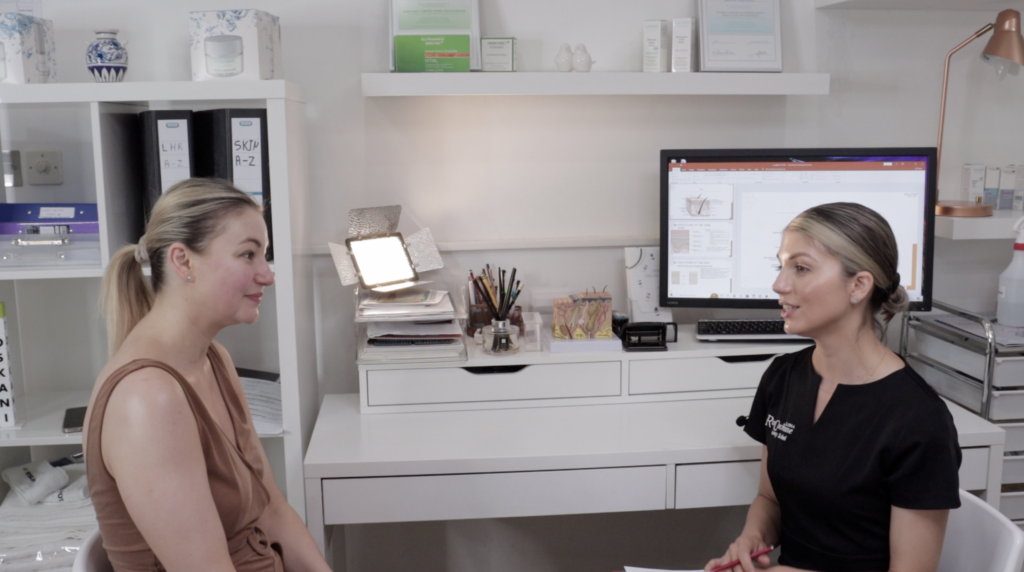
The first step is a client consultation. This pre-treatment screening helps you decide whether the facial is suitable, identify contraindications and agree on a treatment plan with the client.
During a client consultation, your client will fill out some forms concerning:
- Their personal information, including name and age
- Lifestyle choices such as diet, alcohol and smoking habits, etc
- Medical conditions such as eczema, psoriasis, and diabetes
Ask the client to provide accurate information. An active eczema flare-up, a skin infection or a recent procedure may mean the treatment needs to be adapted or postponed.
Use your client consultation time to understand what your client wants to achieve from the treatment.
Explain the treatment and aftercare clearly, answer the client’s questions and obtain informed consent before you begin.
Step 2: Pre-Cleanse
Watch this step in the video (1:17)
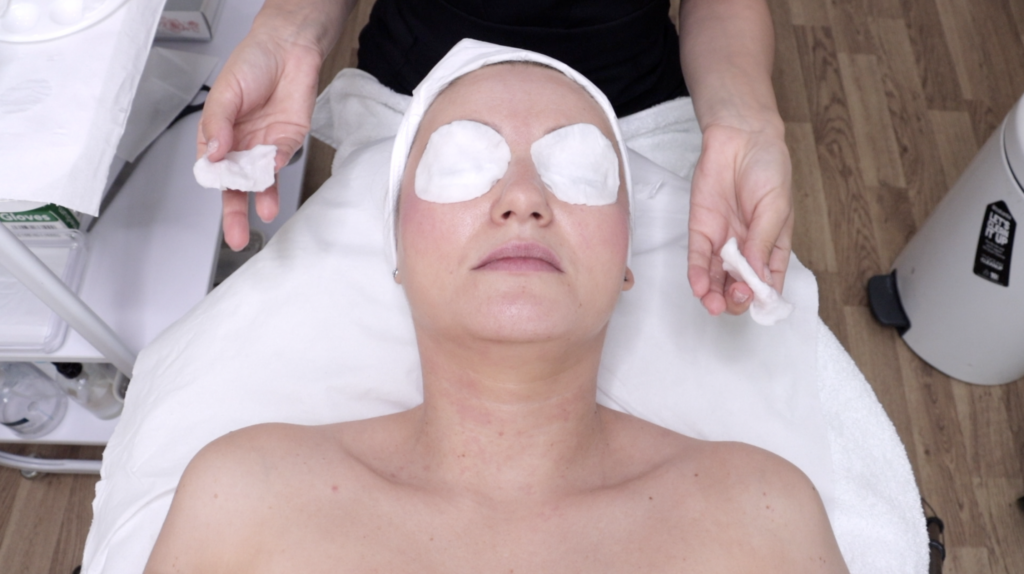
A pre-cleanse removes make-up, surface oil and product residue before the main cleanse. It is similar to the first stage of a double-cleanse routine.
A suitable eye and lip make-up remover can break down stubborn products before the main cleanse. Thorough removal also gives you a clearer view of the skin during your analysis.
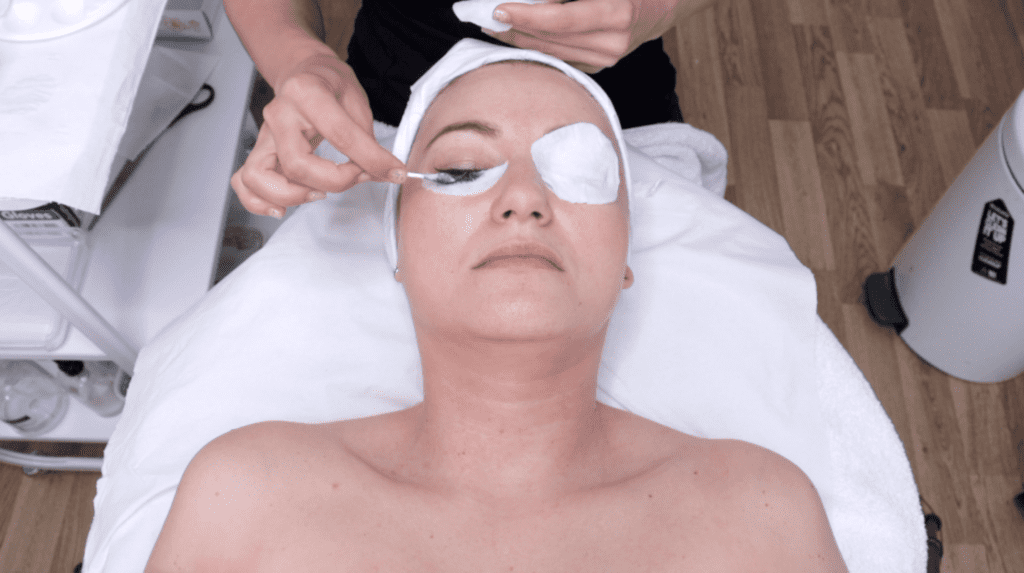
Saturate a cotton pad in a makeup remover before placing them gently on the client’s eyes. Let that sit for a few seconds for the cleanser to break down any products or oils on the eyes and lashes. Then press gently on the cotton pads whilst slowly using circular motions to lift the eye makeup. Repeat this on the lips but use a swiping movement to remove any excess products on the client’s lips.
Finally, a superficial cleanse is applied all over the client’s face. Pour the product onto a cotton pad and gently pass it all over the face, breaking down any excess makeup or oils. Remember to work in light movements to avoid tugging down on the skin.
Complete the pre-cleanse regardless of the client’s skin type (dry, oily or combination).
Step 3: Cleanse and Tone
Watch this step in the video (3:57)
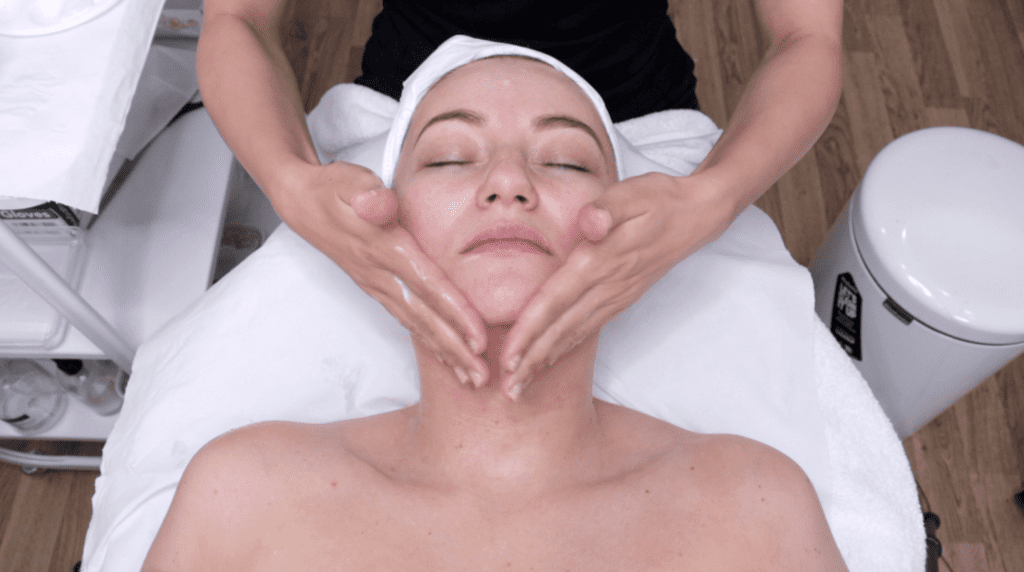
Cleansing removes all the dirt and impurities from the client’s face. When cleansing the face, using the right formula for your client will allow you to clean their skin without taking away its healthy and essential oils.
Choose a cleanser fit for your client’s skin type (dry, oily, or combination skin). Mix the product in wet hands, starting from the client’s chest, and work your way upwards on the client’s face. Use smooth sweeping motions to apply the cleansing product evenly.
Once the cleanser is applied over the face, take a little water in your hands, and massage your cleansing product in. Remove the cleanser with a wet, disposable sponge. Begin, again, at the chest and work upwards to the neck and face while avoiding dragging or pulling the skin.
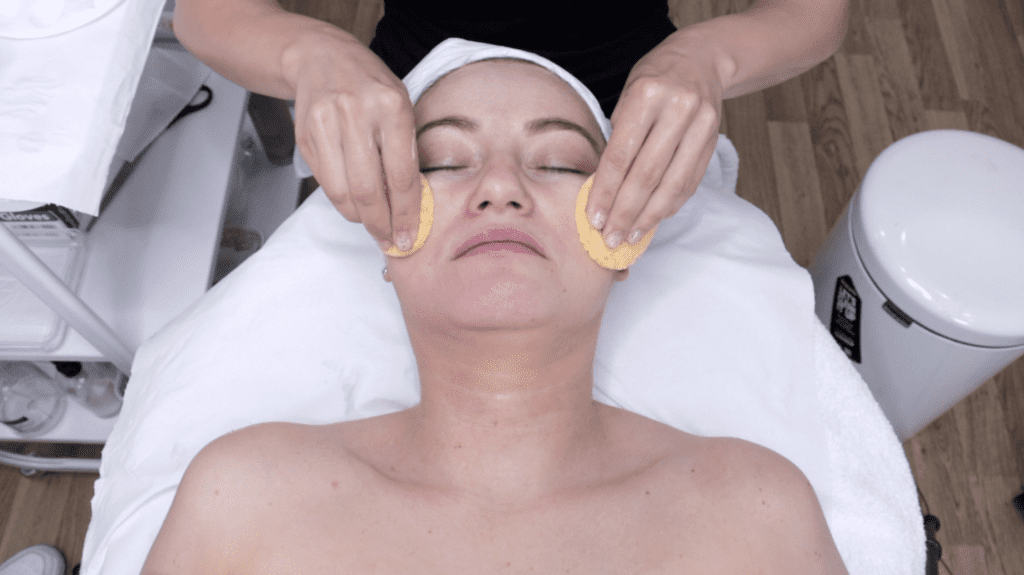
You can now use your toner, which helps to calm the skin while maintaining its natural pH balance. Apply toner to the skin using cotton pads. Begin at the chest and work upwards to the neck and face using sweeping movements. Remove excess moisture with a tissue.
Step 4: Skin Analysis
Watch this step in the video (7:27)
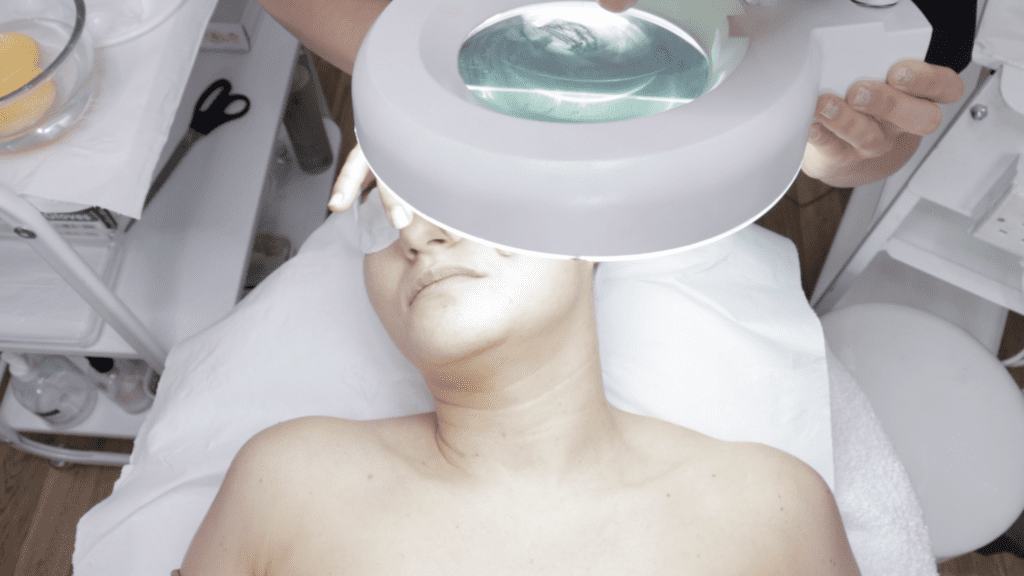
Skin analysis helps you identify the client’s skin type and current condition, including comedones, dehydration, sensitivity, pigmentation or signs of sun damage. Record what you observe and use it to choose suitable products and decide whether any stage should be adapted.
Use the magnifying lamp according to its manufacturer’s instructions. Protect the client’s eyes with damp cotton pads if needed and check that the light feels comfortable.
Begin on one side and work around the face, using the look-feel-touch method. You have to make notes on the skin analysis form. After you finish, remove the cotton pads from the client’s face.
Step 5: Exfoliate
Watch this step in the video (8:34)
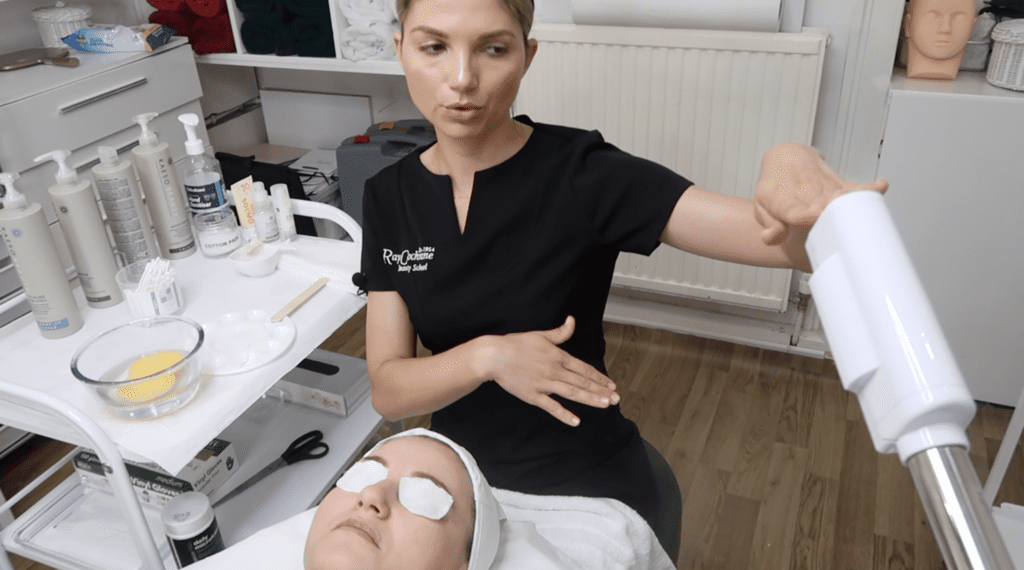
Exfoliation removes dead skin cells from the surface. Professional products generally use a mechanical or chemical method, and the choice should follow the client’s skin analysis and treatment plan.
Mechanical exfoliants lift surface cells through physical action. Chemical exfoliants use ingredients such as enzymes or acids and require careful product knowledge.
A suitable exfoliation stage can leave the skin feeling smoother and help the products used later in the facial spread evenly. Choose the strength and application time carefully rather than treating every skin in the same way.
If steam is suitable, prepare the steamer away from the client and follow the manufacturer’s guidance for distance and treatment time. Do not use steam when it is contraindicated or the skin is heat-sensitive.
Before applying the product, consider these pointers:
- You can dispense the product into the small bowl
- Warm up the products in your hands before applying them to the skin
- Read and follow the manufacturer’s instruction
- Avoid eyelids and mouth
When applying the exfoliant, begin at the chest and work upwards from the neck to the face. Massage with circular movements until slight erythema occurs.
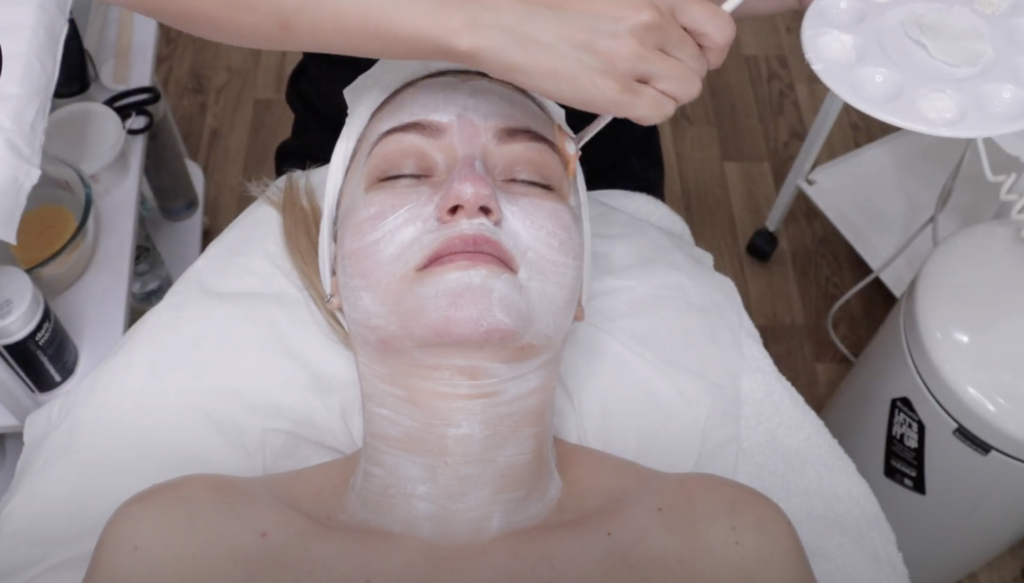
To steam:
- Place cotton pads on the eyes
- Position the steamer 25-30 cm away from the face, behind the head or to the side
- Steam for 5-10 minutes
- Remove the steamer away from the client before turning it off
After the above steps, remove the exfoliant by releasing steam to avoid discomfort or burning. Press gently down on the face and forehead, then work downwards from the neck. Use sponges saturated with warm water to wipe off any excess product.
Step 6: Treat and perform extractions
Watch this step in the video (10:46)
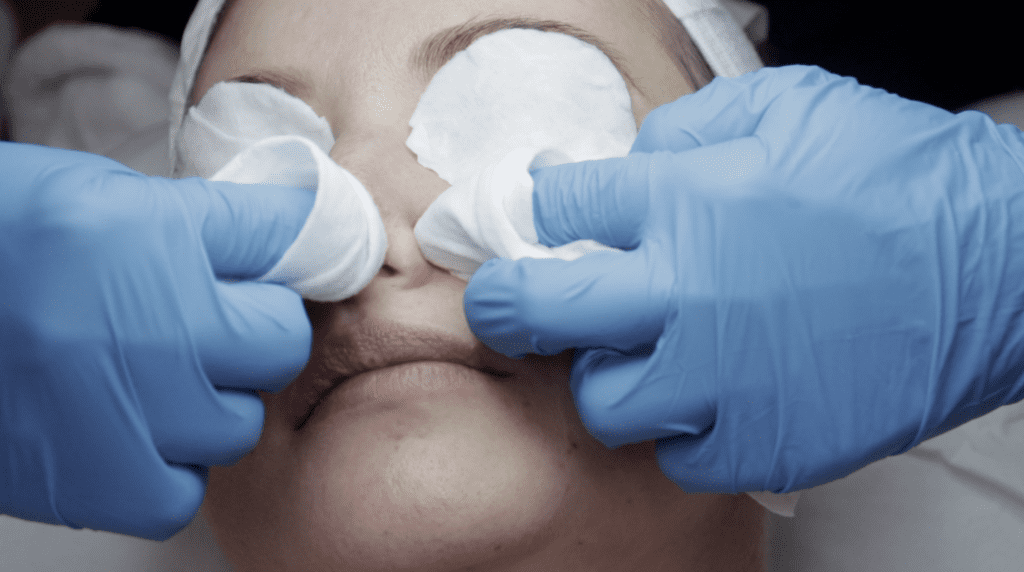
Extractions should only be carried out after a skin assessment and by someone trained in the technique. Do not extract inflamed, infected or broken areas. If the skin is not suitable, skip this stage.
Put on clean gloves and position the magnifying lamp at the distance recommended by its manufacturer. Wrap your index fingers with clean, moistened gauze or cotton pads. Apply gentle, controlled pressure around an open comedone and stop if it does not release easily. Never force an extraction, as this can damage the skin and lead to bruising or scarring.
- Work gently and only on suitable comedones.
- Wipe away expressed sebum with clean gauze.
- Replace used gauze rather than moving it across the face.
- Apply the appropriate post-extraction product according to your treatment protocol.
Once the extraction stage is complete, remove any excess moisture by patting the skin with a clean tissue.
Step 7: Massage
Watch this step in the video (12:51)
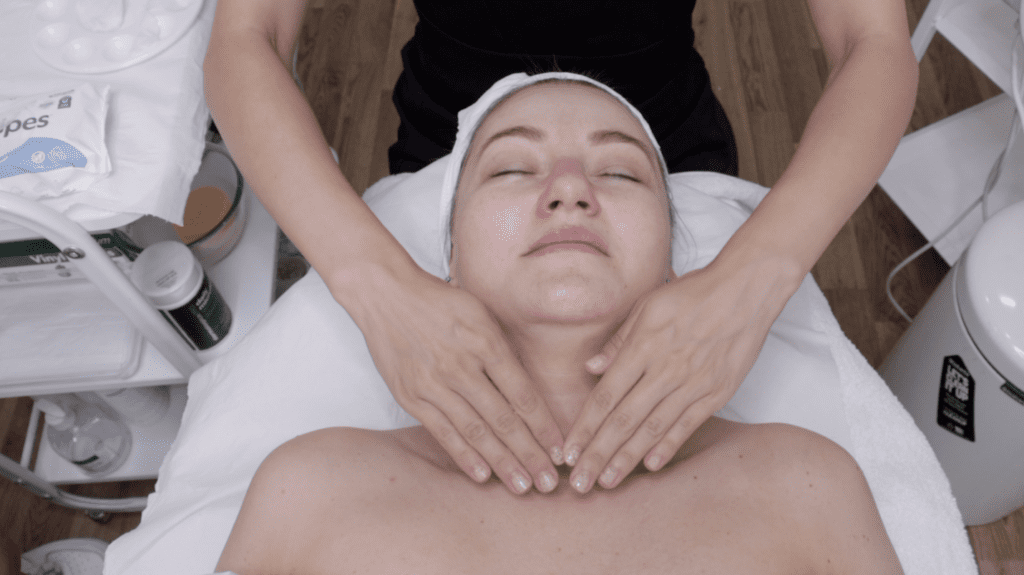
A massage can be really relaxing for the client, especially after the extraction process. You’ll find that it’s your client’s favourite part of the facial treatment.
For the massage, choose products that are suitable for your client’s skin type. Apply the product to both hands and use gliding effleurage movements with a slow rhythm and light pressure
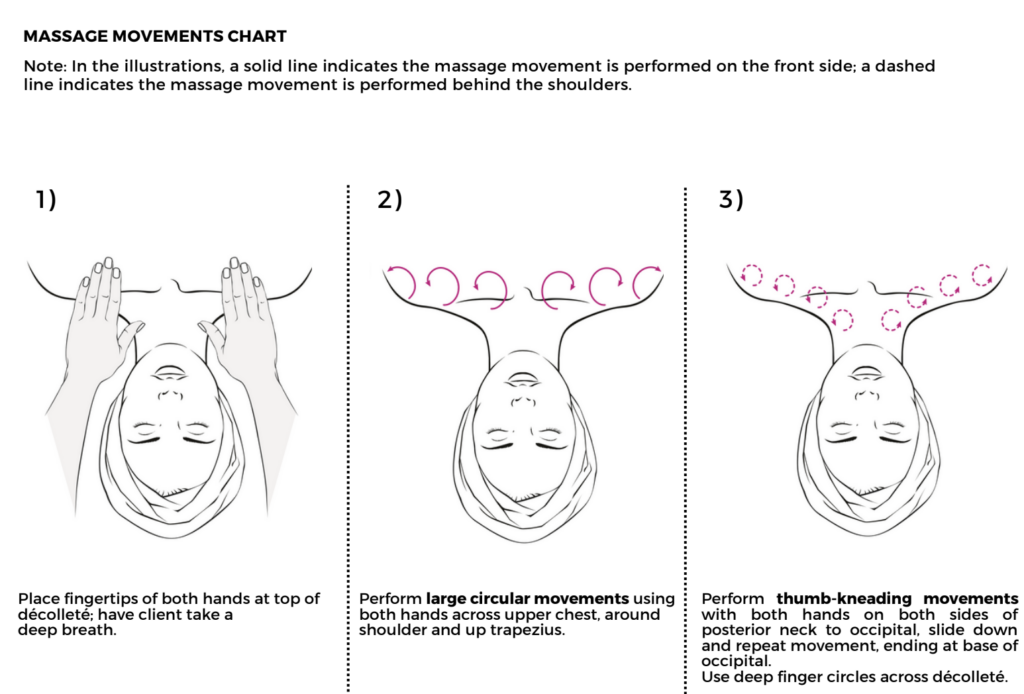
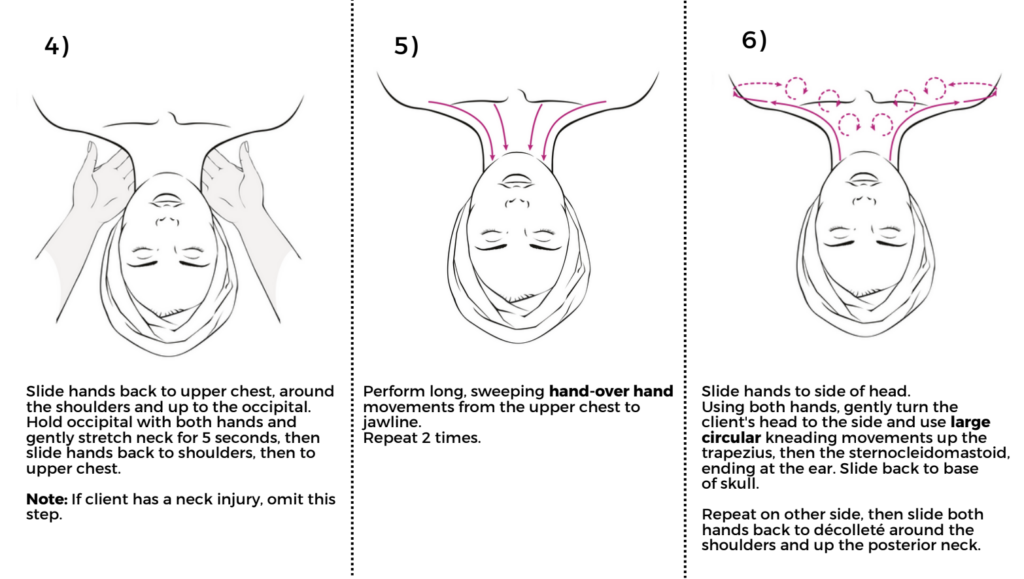
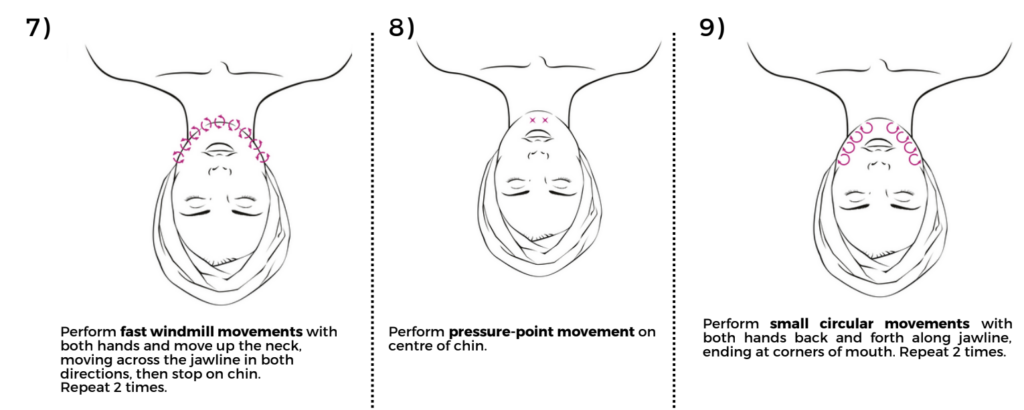
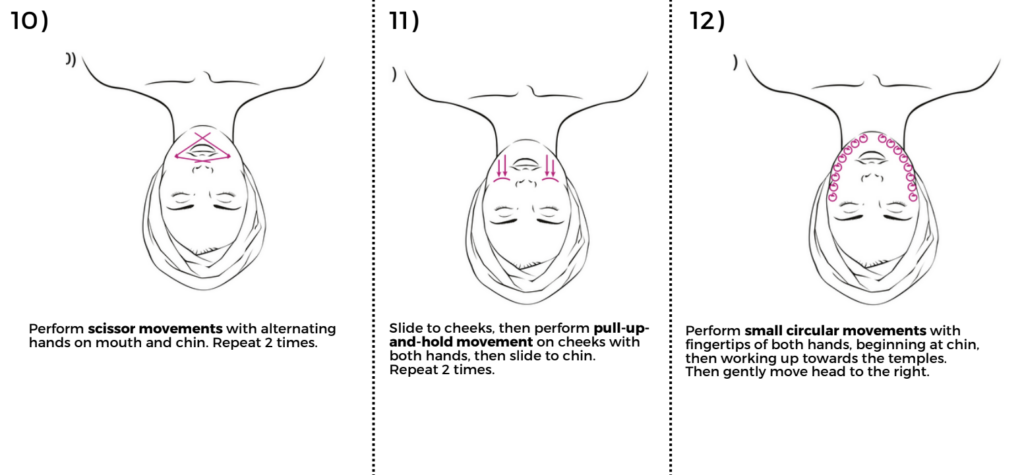
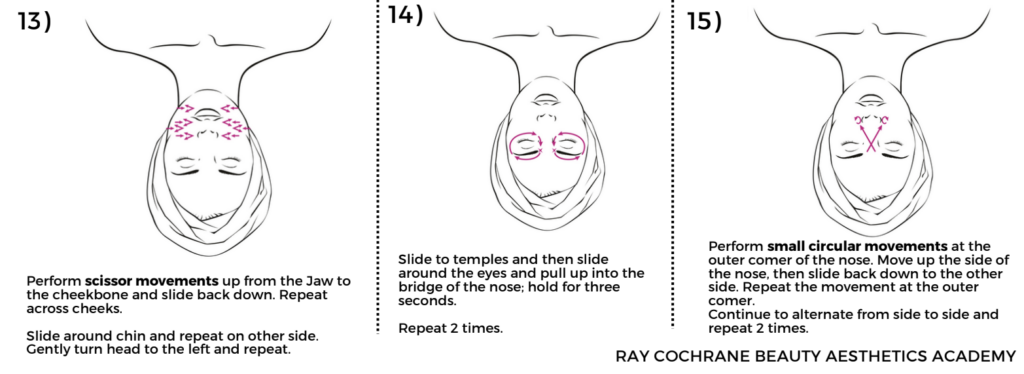
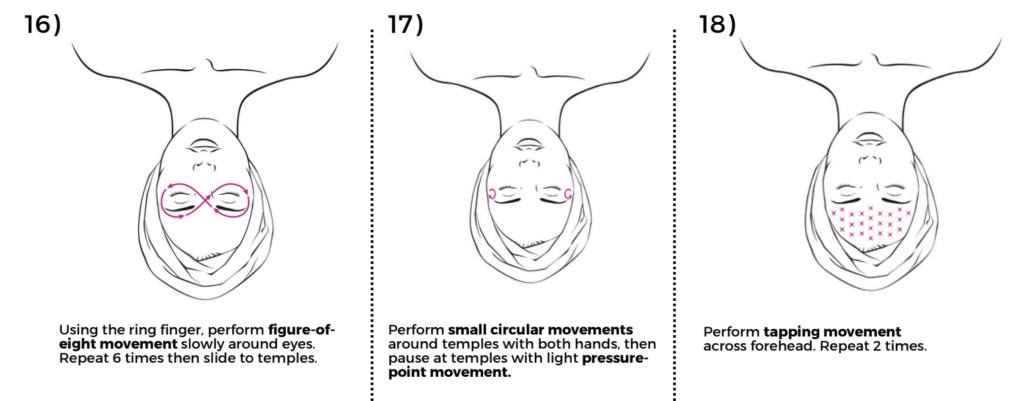
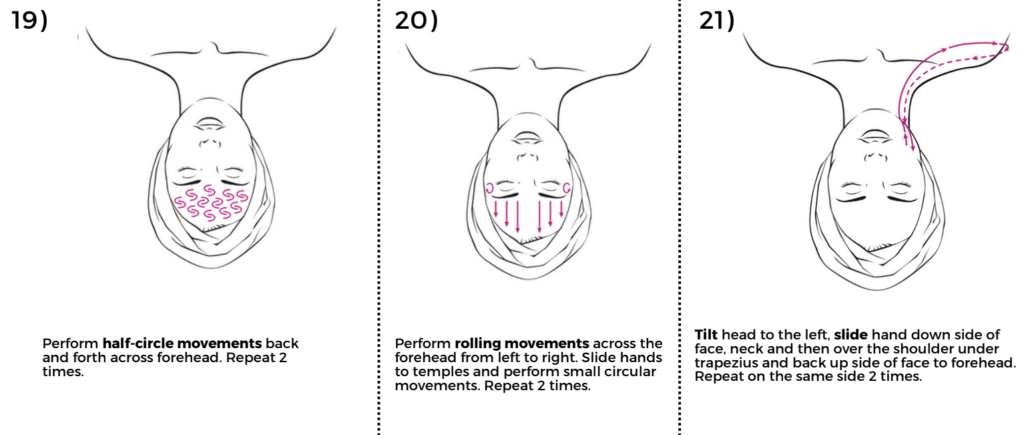
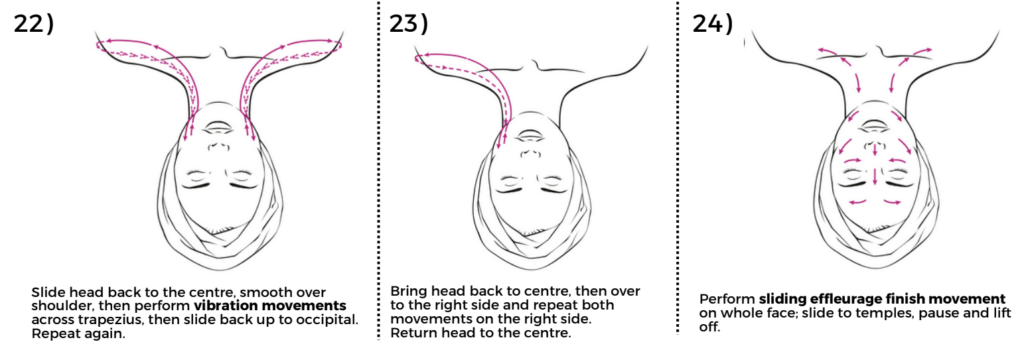
Then massage the face, neck, upper chest and shoulders using effleurage, petrissage, tapotement (percussion), friction and vibration movements
You can refer to the Massage Movements Chart below:
Step 8: Mask
Watch this step in the video (15:09)
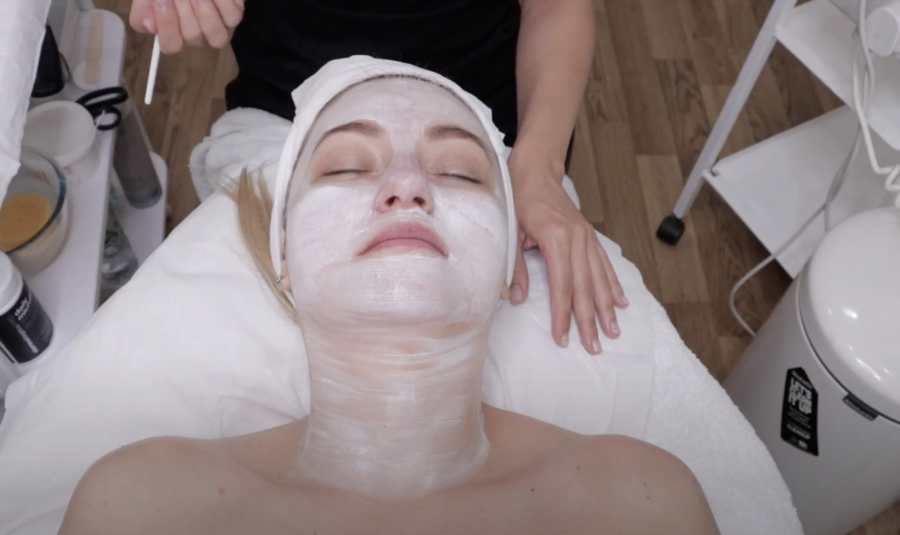
You’re nearly at the end of your facial routine, and a mask is a great way to finish off and leave the skin refreshed.
Opt for a thermal heating mask to ensure the best penetration of the active ingredients to the skin. It will also relax the skin and reduce the redness caused by extraction.
Choose a mask suitable for the client’s skin type. Begin applying to the T-zone with long, sweeping strokes using a fan brush. After that, apply to the collarbone area and move up the neck, then the jawline, chin and cheek area.
After the mask is applied, place eye pads over the client’s eyes and allow the mask to set for approximately 10 minutes. To really elevate your service, while the face mask is setting, you can perform a hand massage on the client.
To remove the mask, discard eye pads, use a wet sponge and wipe gently across the chest, face and forehead.
Step 9: Protect
Watch this step in the video (17:27)
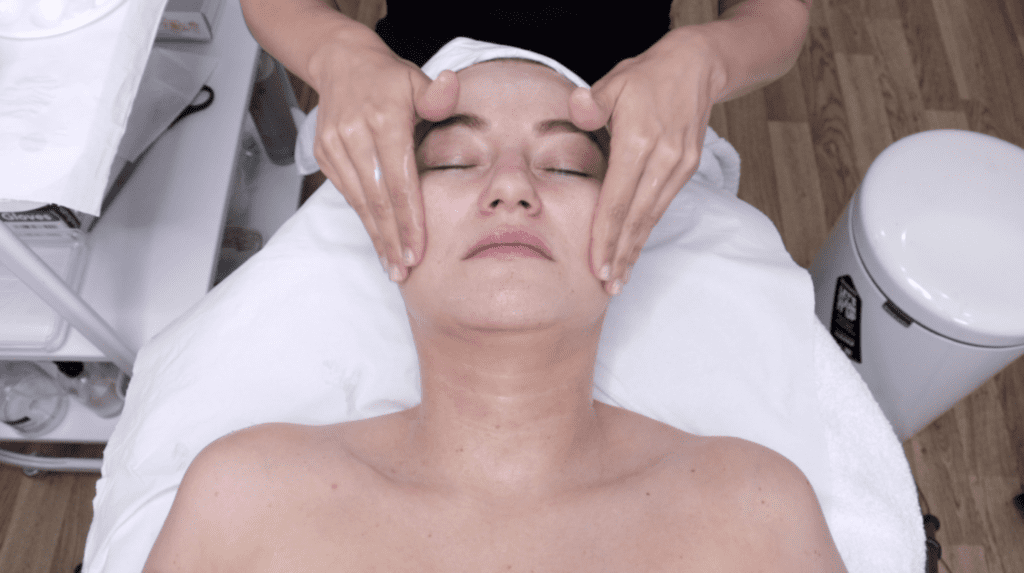
After the active treatment stages, apply products chosen for the client’s skin and treatment plan. Keep the finish simple if the skin is sensitised, and avoid adding products that were not considered during the consultation.
Apply the eye product gently around the orbital area, then use the selected serum and moisturiser on the chest, neck and face. For a daytime treatment, finish with a broad-spectrum SPF 30 or higher.
Step 10: Completion
Watch this step in the video (18:32)
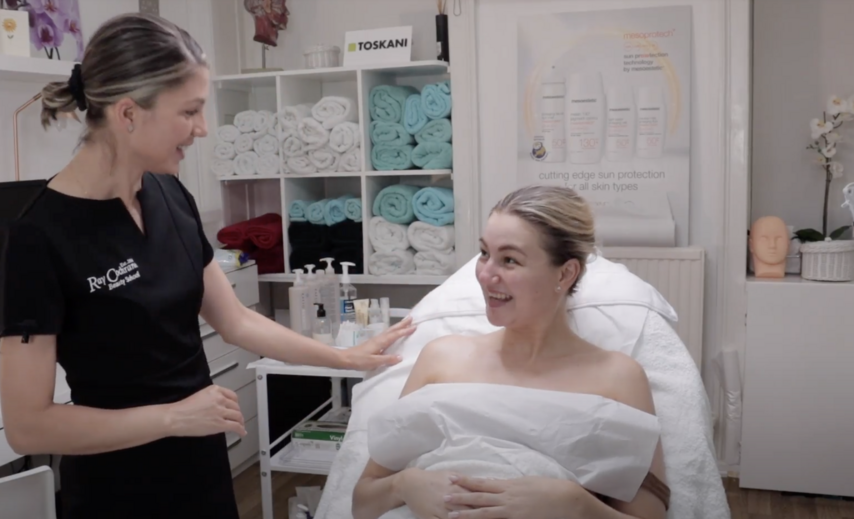
You can now remove the client’s towel and headband and assist them in sitting up safely. It is important to communicate with the client, ask about their experience and give aftercare advice.
Once the client is comfortable, give clear aftercare advice and note any products or recommendations on their record. After they leave, dispose of single-use items, disinfect the workstation and reusable equipment, and replace all used linen before the next appointment.
Train in professional facial and skincare treatments
This guide is useful when you want to check the order of a facial or revisit a particular movement. Developing safe treatment skills takes supervised practice and feedback from a tutor. Formal assessment may also be required.
- VTCT Level 2 Facial and Skincare course: classroom training in London with practical teaching and assessment.
- Online facial and skincare course: a flexible way to study the treatment theory and routine.
- How to become a qualified facialist in the UK: a separate career guide covering qualifications, training routes and next steps.
If you are unsure which course suits your experience and plans, book a course consultation, call 020 7486 2691 or email admission@raycochrane.co.uk.