By Eleonora Androva, Education Director at Ray Cochrane Beauty Aesthetics Academy
Two bottles can both say “glycolic acid” and behave differently on the skin. A higher percentage does not automatically make a product the better choice. And an acid described as gentle can still cause harm when used on unsuitable skin.
That is where understanding chemical peels becomes more interesting than memorising ingredient names.
I developed the advanced aesthetics course at Ray Cochrane and currently teach our Level 5 non-surgical aesthetics course. My perspective as an educator is that learning an ingredient’s name is only the starting point. A practitioner also needs to understand why they would choose it, when they would avoid it and what they expect the skin to do afterwards.
If AHA, BHA and TCA still look like a collection of letters, this guide will help you make sense of them.
What is the difference between AHA, BHA and TCA?
AHA and BHA describe categories used in skincare terminology. TCA is the abbreviation for one particular chemical: trichloroacetic acid.
They are not three stages on a ladder from beginner to advanced.
Chemical peel terminology at a glance
AHAAlpha hydroxy acids
↓
GlycolicLacticMandelic
BHASkincare terminology
↓
Usually salicylic acid
TCAA specific peeling agent
↓
Trichloroacetic acidNot an AHA or BHA
These are ingredient categories and names, not a ranking of peel strength.
| Term | Examples | What students should understand |
|---|---|---|
| AHA | Glycolic, lactic and mandelic acid | These ingredients appear in exfoliating skincare and professional peels. The formulation affects how they behave. |
| BHA | Usually salicylic acid in skincare | Commonly used in products for oily, congested and blemish-prone skin. |
| TCA | Trichloroacetic acid | A different peeling agent. Treatment depth and risk depend on the formulation and how it is used. |
This is a guide to terminology, not a product-selection chart. You cannot choose a suitable peel from the acid name alone. DermNet’s overview of chemical peels explains the different agents and treatment depths.
What are AHAs?
Alpha hydroxy acids help exfoliate the skin’s surface. You will encounter them in everyday skincare as well as professional treatment products.
Glycolic and lactic acid are familiar examples. Mandelic acid also belongs to this family, although the names can make them sound unrelated.
Glycolic acid
Glycolic acid appears in products intended to improve concerns such as rough texture, uneven tone and signs of photoageing.
Its relatively small molecular size is one reason it receives attention in skin science. However, knowing that fact does not tell you how a particular glycolic product will perform. Its concentration, pH and formulation still matter.
Lactic acid
Lactic acid is another AHA used for exfoliation. It also has moisture-related benefits in appropriate formulations, which helps explain its presence in products aimed at dry or rough-feeling skin.
That does not mean every lactic acid peel suits dry skin. Dryness and a damaged skin barrier are not interchangeable descriptions, and a client’s current skin condition needs assessment.
Mandelic acid
Mandelic acid has a larger molecular structure than glycolic acid and is often discussed as a more tolerable option in certain formulations.
I would be careful with the word “gentle”, though. It can make an active product sound suitable for everyone. Sensitivity, recent treatments and the complete formulation all affect the decision. Research on peeling agents discusses these differences, but it does not support choosing a product solely by its reputation. Clinical review of chemical peels and patient selection.
What is BHA, and why is salicylic acid different?
In skincare, BHA usually refers to salicylic acid.
Unlike the commonly used water-soluble AHAs, salicylic acid is lipid soluble. Its exfoliating action and affinity for oily environments help explain its use in products for congestion and blemish-prone skin.
It does not simply “wash the oil out” of pores, and oily skin does not automatically need a strong salicylic treatment. A client can have an oily surface and irritated, uncomfortable skin at the same time.
For a student, this is a useful distinction: identifying the skin type is part of the consultation, but it does not replace assessing the skin’s condition that day. The FDA’s explanation of BHAs also notes that salicylic products can cause irritation and need appropriate precautions.
What is TCA?
TCA stands for trichloroacetic acid. It acts through protein coagulation in the skin, producing a controlled injury as part of a professional peeling procedure.
TCA is sometimes presented online as simply “a stronger acid”. That description leaves out too much. TCA-containing treatments can produce different depths of injury depending on the product and treatment protocol.
The potential for deeper effects brings greater responsibility for selection, recovery and complications. Reading about TCA does not qualify someone to use it, and completing a general peel course should never be interpreted as permission to perform every TCA procedure.
Practitioners need training for the treatment they intend to deliver and must confirm their professional scope, product requirements and insurance cover. DermNet: chemical peels.
Why percentage alone does not tell you a peel’s strength
It is tempting to compare acid percentages as if they were a simple strength score. They are not.
For many acid formulations, pH affects how much acid is available in its active, un-ionised form. Buffering and the product’s vehicle also influence its behaviour. Application conditions and the skin being treated add further variables.
A percentage cannot tell you all of that.
This is why I would want a learner to explain a product choice rather than say, “This one has a higher number.” Professional judgement means understanding the complete product and following its validated protocol, not improvising from the label. Review of the factors affecting chemical peel depth.
A skincare serum and a professional peel are different decisions
Recognising an ingredient from your bathroom shelf can create a false sense of familiarity.
A home-use exfoliating product and a professional peel may contain the same named acid, but their formulations, intended use and risks can differ considerably. Experience using an acid toner is not preparation for performing a peel on another person.
Professional treatment requires consultation, assessment, informed consent, appropriate application and a plan for aftercare and unexpected reactions.
Sun protection deserves particular attention. AHAs can increase sensitivity to sunlight during use and for a period afterwards. The FDA’s AHA guidance advises sunscreen, protective clothing and limiting sun exposure.
Start with the skin, then consider the acid
Before thinking about a particular peel, I would want to understand:
- What concern the client wants help with and whether it falls within the practitioner’s scope.
- Their medical history, medicines, skincare and recent treatments.
- Whether the skin is irritated, inflamed or otherwise unsuitable for treatment.
- Their history of pigmentation changes and previous treatment reactions.
- Whether they can follow the preparation and aftercare requirements.
Sometimes the appropriate decision is to postpone treatment or refer the client.
Pigmentation needs particular care. A treatment intended to improve uneven tone can make pigmentation worse if it causes excessive inflammation. For a separate discussion of that concern, read our guide to chemical peels and hyperpigmentation.
Where chemical peel training fits at Ray Cochrane
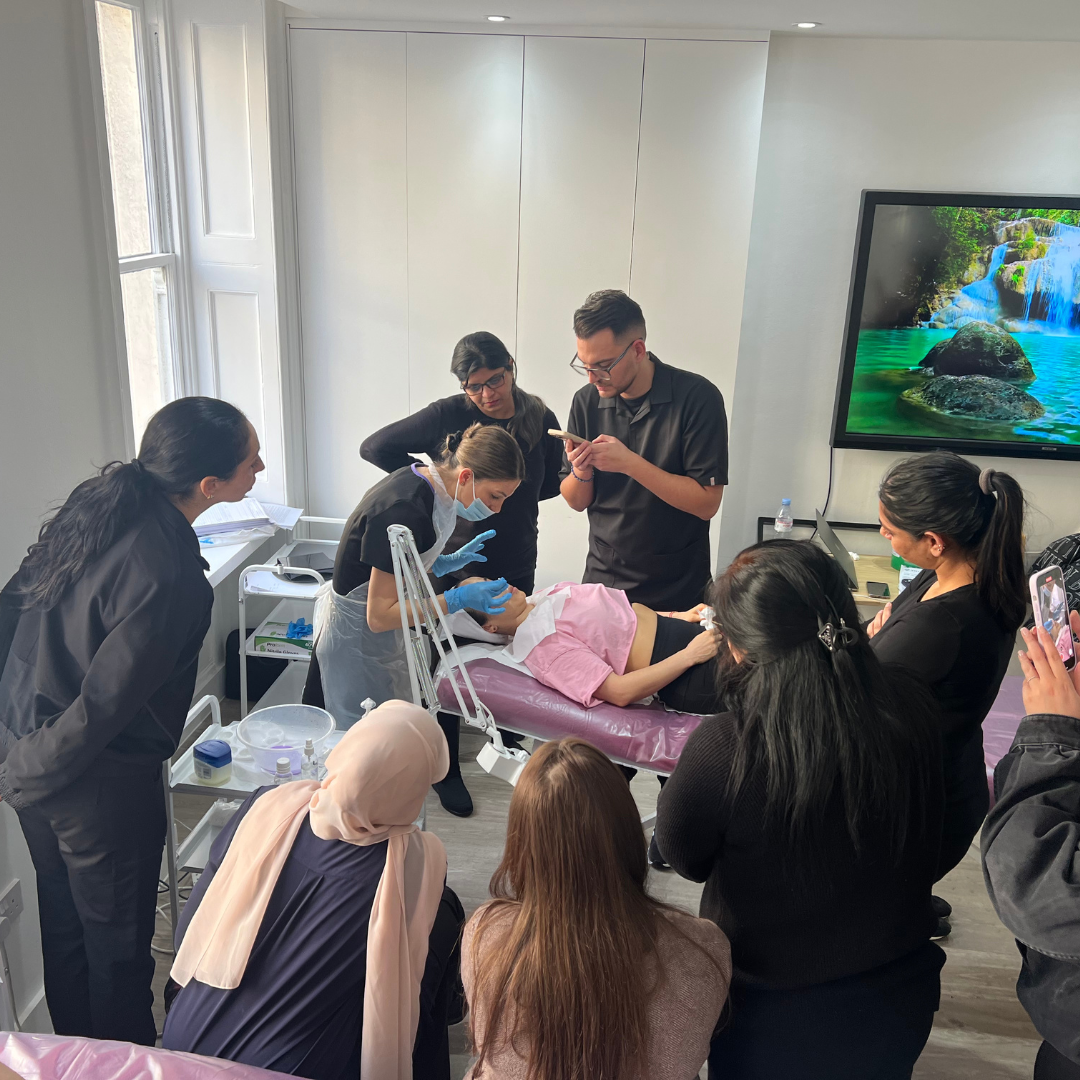
At Ray Cochrane, superficial chemical peels are taught within the VTCT Level 4 Certificate in Advanced Aesthetic Therapies for Skin Rejuvenation, alongside skin science, consultation and microneedling. We no longer offer chemical peeling as a standalone course.
For practitioners with a suitable Level 4 qualification, the Level 5 Certificate in Non-surgical Aesthetic Procedures for Skin Rejuvenation develops further knowledge of skin assessment, advanced treatments and complication management.
I teach on this Level 5 programme. The perspective I want this article to encourage is simple: be curious about the science, and be precise about the limits of your knowledge.
You do not need to memorise every acid before starting your training. You do need to move beyond asking which acid is strongest and learn to explain why a particular treatment is appropriate for the person in front of you.
About Eleonora Androva
Eleonora Androva is Education Director at Ray Cochrane Beauty Aesthetics Academy and a skin expert. She developed the academy’s advanced aesthetics course and currently teaches the Level 5 non-surgical aesthetics course.
This article provides educational background. It is not a chemical peel protocol or personalised treatment advice.