
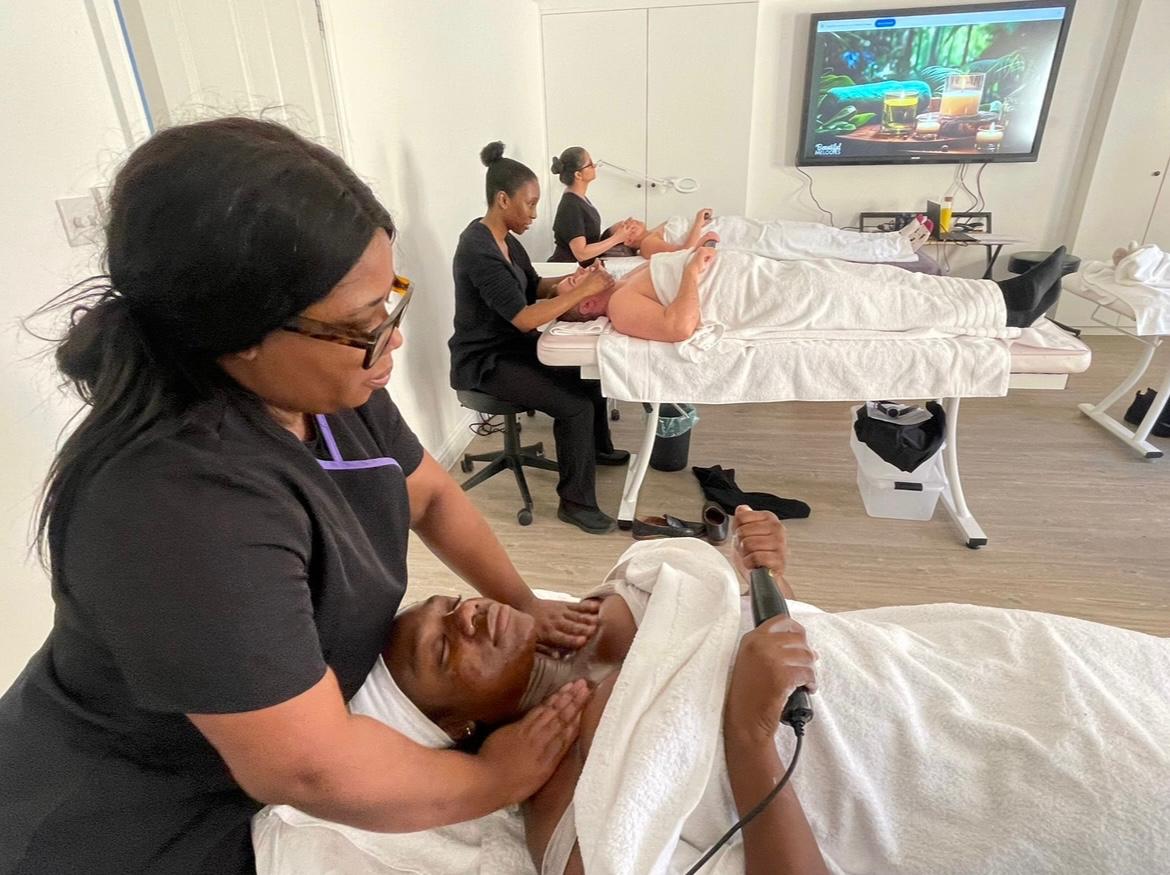
Choosing a facial electrical treatment starts with the client. What do they want to achieve? What does the consultation tell you, and how does that affect the equipment you choose?
If you already offer manual facials and want to add electrical treatments, these are useful questions to take into your course search. You need time to learn how the equipment works and how to select and use it safely for different clients.
At Ray Cochrane Beauty Aesthetics Academy, the VTCT Skills Level 3 Award in Facial Electrotherapy covers client assessment and treatment planning alongside practical equipment skills. The qualification brings those decisions into the work students practise and demonstrate for assessment.
What are facial electrical treatments?
Facial electrotherapy uses professional electrical equipment as part of facial treatments. The equipment covered by the Award includes galvanic, microcurrent, electro muscle stimulation (EMS), lymphatic drainage equipment, and direct and indirect high frequency.
Each type of equipment works differently. Students study its principles and intended effects, the precautions that apply and how to adapt treatment to the client's needs. A treatment choice needs to account for the skin you have assessed and the information gathered during consultation.
The practical work includes choosing suitable products, preparing the client and carrying out treatment. Students also learn to evaluate the treatment and give aftercare advice.
What comes before choosing a machine?
Consultation and skin analysis give you the information to plan treatment. Alongside the client's goals, you need to consider the condition of their skin and anything in their history that affects whether you can proceed.
That means gathering relevant information, examining the skin and carrying out the checks required for the proposed treatment. Sometimes the appropriate decision is to modify the plan, postpone treatment or seek further advice. The equipment instructions and treatment protocol guide those decisions.
Our guide to skin analysis explains that foundation in more detail. In electrical training, the next step is using your findings to explain a treatment choice.
When comparing courses, ask how you will learn to explain your choices. What findings would support a particular treatment? What would make you change the plan? The qualification requires students to select equipment and products to suit the client's needs, skin type and condition.
Two concerns, different treatment choices
A client concerned about loss of facial muscle tone gives students a reason to compare EMS and microcurrent. In teaching, EMS is discussed as a muscle-toning treatment. Microcurrent is considered for aims involving the appearance of facial contours and fine lines. The student needs to connect those aims with what the consultation and skin assessment have shown.
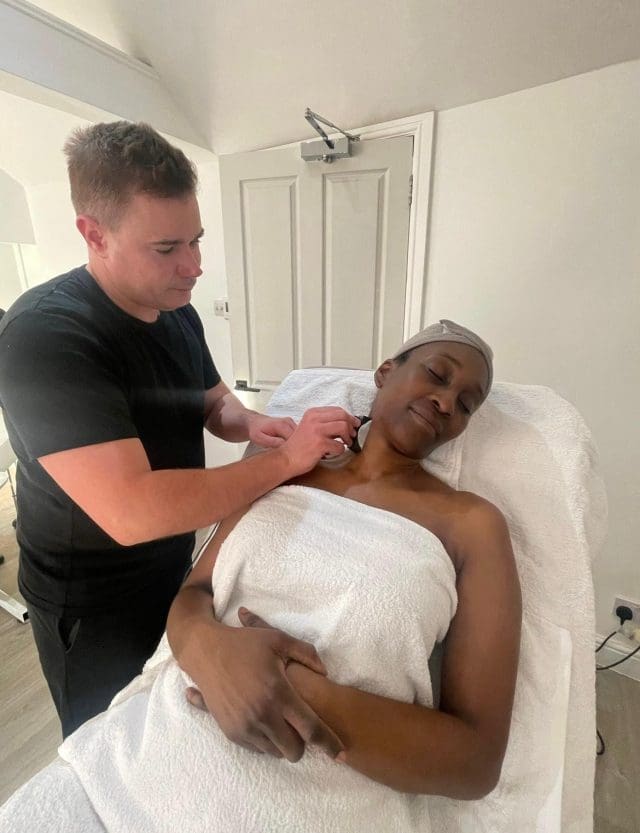
For a client concerned about dull-looking or congested skin, galvanic may be considered instead. Students choose suitable products for the client's skin type and condition, and explain how that choice fits the treatment plan. Both the product and the equipment instructions matter.
These are examples of possible treatment aims, not guaranteed results or automatic choices based on a single concern. Suitability still depends on the full consultation.
Consultation also includes checking contraindications: conditions or circumstances that may prevent or restrict treatment. A pacemaker or a contagious skin condition may prevent treatment. Metal pins or plates near the proposed treatment area may restrict what is suitable. Irritated skin is another reason to pause and review the plan. Students check these findings with their tutor against the equipment instructions and treatment protocol, seeking appropriate medical advice where required. These examples are not a complete safety checklist.
What can a practical demonstration help you understand?
During a demonstration, the tutor's explanation can make a preparation step easier to understand and remember. These practical demonstrations support the wider teaching on consultation, contraindications and aftercare in the academy's materials and classes.
In the academy's galvanic demonstration, the tutor explains how skin analysis informs the choice of treatment gel. Students hear the reason for the product choice alongside the practical explanation.
The microcurrent demonstration explains the role of conductive gel and prepared probes before application. In the EMS demonstration, the tutor introduces checking the equipment before using it on the client. These details connect preparation with the treatment students are learning.
How do tutors check that students understand their choices?
Tutors ask students to explain their proposed treatment to the client in clear language. This helps the client understand the plan and gives the tutor a way to check the student's reasoning alongside observing their practical work.
For the muscle-tone example, the student needs to explain why EMS or microcurrent is being considered and what the treatment is intended to address. For the galvanic example, the explanation should connect the product choice with the skin assessment. Naming a machine gives the tutor much less information than explaining that connection.
When comparing courses, ask how tutors use these discussions during practice and how they help students work through a misunderstanding. You should also know what to practise before your next assessment.
What does the Level 3 assessment involve?
The Award's practical unit is UV30403: Provide facial electrotherapy treatments. An assessor must observe you demonstrating competent performance of its practical requirements on at least five occasions. You also need to complete two external theory papers successfully and provide evidence of the required knowledge.
Those five occasions apply across the unit, not to each machine separately. Your evidence must also cover everything on the unit's range list. This includes the equipment used, consultation methods, different skin types and conditions, treatment objectives and aftercare. It also covers decisions such as modifying treatment or explaining why it cannot go ahead.
The VTCT Skills assessment book strongly recommends practical demonstration of all range items. Where that is not possible, other evidence may be permitted. Ask your assessor how these rules apply to the evidence you need to collect.
Before enrolling, ask how practice and assessment fit together. You should understand what you will need to demonstrate, how your evidence is recorded and where tutor feedback fits into your preparation.
Which course fits your starting point?
For learners with an accepted facial qualification, the Level 3 Facial Electrotherapy Award is a specialist route into electrical treatment skills. Your previous subjects and practical training matter when checking suitability, as well as the level of your certificate.
For complete beginners, the combined Level 3 Access and Facial Electrotherapy course brings foundation learning and practical electrical training together through two separate qualifications. Access includes electrical science; the Facial Electrotherapy Award covers the practical electrical treatments. The distinction matters when comparing what each course teaches.
Admissions can take your existing facial qualification into account before recommending further foundation study.
This article explains what to look for in professional training. It is not a treatment protocol or a substitute for supervised learning and the relevant equipment instructions.
Check your next step with Admissions
Email admission@raycochrane.co.uk with details of your facial qualification and what you want to learn next. If you are starting from scratch, mention that too. Admissions can check your background and any certificates, then discuss the appropriate route and current course arrangements before you decide whether to enrol.