

A client describes their skin as oily, but also says that it feels tight after cleansing and stings when they apply a new product. Which detail should guide the facial?
That is why skin analysis matters. A label such as “oily” or “dry” is a starting point, not a complete treatment plan. You need to listen to the client, observe their skin and understand enough skin science to judge what is suitable today.
The benefits of skin analysis extend from everyday facial treatments to advanced aesthetics. It helps practitioners choose appropriate products and techniques, recognise when treatment should be adapted or postponed, and explain their decisions to clients.
What is skin analysis?
Skin analysis is a structured assessment of the skin as part of a professional consultation. It brings together the client’s concerns, relevant history, current skincare routine and the practitioner’s observations to inform a suitable treatment plan.
For a facial, that may mean assessing oiliness, dryness, texture, visible congestion and signs of irritation. The practitioner also considers factors that could make a treatment unsuitable, known as contraindications.
This is not a medical diagnosis. A beauty or aesthetics qualification does not, by itself, qualify someone to diagnose skin disease or identify the medical cause of a skin concern. Knowing when to stop and recommend advice from an appropriate healthcare professional is part of working responsibly.
Six benefits of skin analysis before a facial or aesthetic treatment
1. It makes the consultation more useful
Clients do not always describe their skin in the same terms a practitioner would use. “Sensitive” might mean occasional tightness, a reaction to a particular product or an ongoing concern that needs medical assessment.
Asking what the client has noticed, when it started and what they hope to achieve gives you more useful information than a tick-box skin type alone. It also gives the client an opportunity to explain worries before treatment begins.
2. It supports an individual treatment plan
Two clients who describe their skin as dry may not need the same facial. Their current skin condition, treatment history, preferences and suitability may differ.
Analysis helps you select or adapt the treatments within your training and professional scope. Sometimes the appropriate decision is a simpler treatment. Sometimes it is to postpone it. A good consultation should not begin with a commitment to perform a particular procedure regardless of what you find.
3. It helps you choose products more thoughtfully
A product that suits one client may be unsuitable for another. Understanding what the client already uses, what they have reacted to and how their skin currently presents helps you avoid recommendations based only on a product’s popularity.
Product choice should also follow your training, the manufacturer’s instructions and any relevant treatment or insurance requirements. Skin analysis informs those decisions; it does not replace them.
4. It helps you recognise when not to treat
Consultation and observation can reveal reasons to change, delay or decline a treatment. They also help identify concerns that fall outside a practitioner’s competence.
This can reduce avoidable risk, but no skin assessment can guarantee that an adverse reaction will not happen. Unexplained or persistent changes should not be given a guessed diagnosis in the treatment room. For example, the American Academy of Dermatology advises seeking dermatological help for persistent or worsening dry skin.
5. It makes advice easier to explain
Clients are more likely to understand a recommendation when they know the reasoning behind it. Rather than saying “this is the facial you need”, you can explain what you have observed, what the treatment can realistically address and where its limits lie.
Clear explanations support informed choices. They also help keep expectations realistic: an aesthetic improvement is not the same as treating an underlying medical condition.
6. It creates a record for future appointments
Consultation notes provide a point of comparison. At a later visit, you can review the client’s feedback, any changes to their routine or relevant history, and how their skin now presents.
Reassessment matters even for a regular client. A previous treatment plan should not become an automatic instruction to repeat the same treatment every time.
Can skin type change, or is it only skin condition?
In beauty education, “skin type” often describes a person’s usual pattern of oiliness or dryness, while “skin condition” describes what is happening at a particular time. This is a useful teaching distinction, but it should not be treated as a fixed medical classification.
It is too absolute to say that skin type can never change. Skin characteristics can vary over a lifetime, and the skin you assess today may not match the description a client has used for years.
A study of 713 people published in Skin Pharmacology and Physiology found differences in sebum levels, hydration and surface pH between age groups, sexes and body sites. This was a comparison between people, not a study following each person’s skin type over time.
The American Academy of Dermatology also describes how age, weather, washing habits and some products can contribute to dry skin. The practical lesson is to assess the person in front of you, rather than rely on an old label.
Why skin science matters
Learning to recognise a skin characteristic is only part of the skill. You also need to understand the tissue you are working with.
Knowledge of skin structure and function helps a learner connect what they observe with treatment choices. At more advanced levels, the study of dermatological science develops that understanding further, including skin ageing, relevant conditions and wound healing.
This becomes particularly important when studying treatments such as skin needling and superficial chemical peels. A practitioner needs to understand the reasons for consultation, suitability checks, treatment limits and aftercare, rather than learn a sequence of steps without the science behind it.
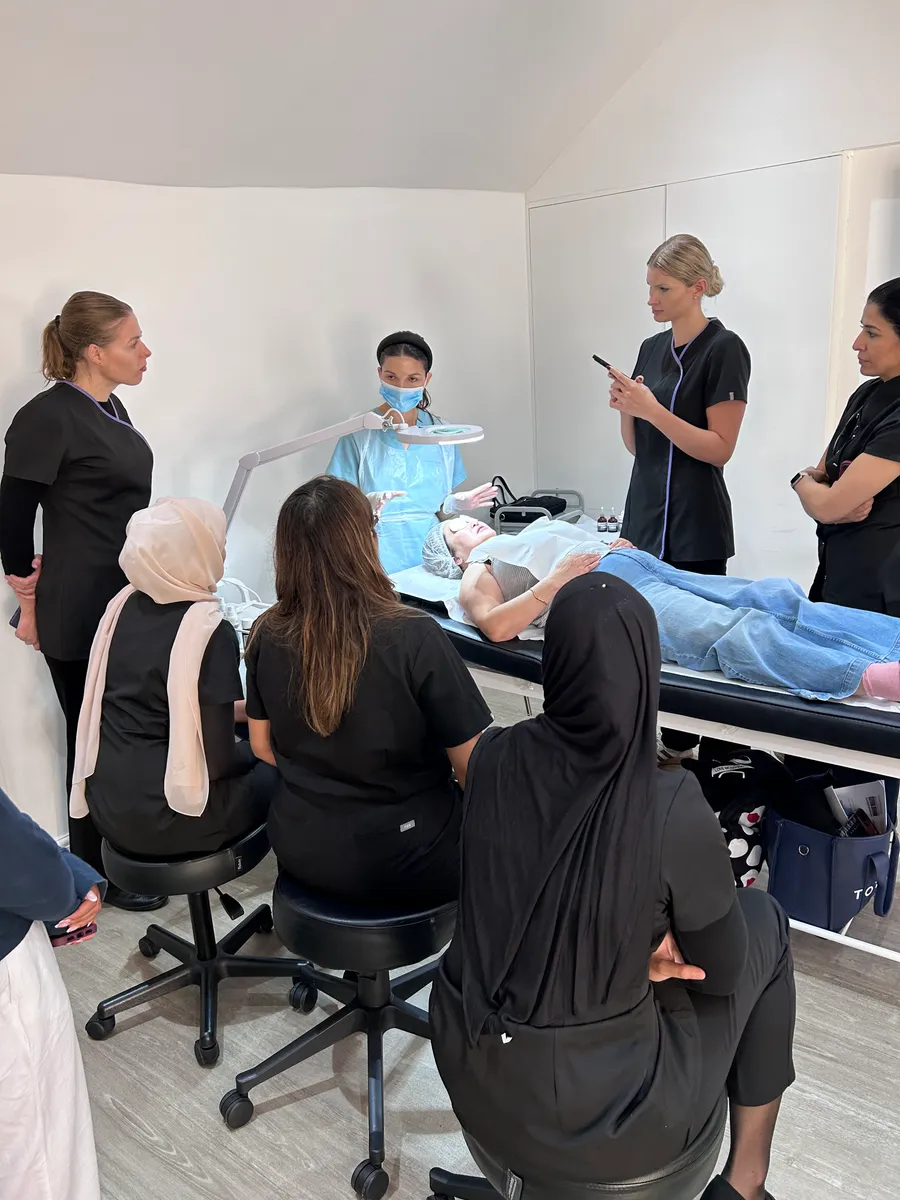
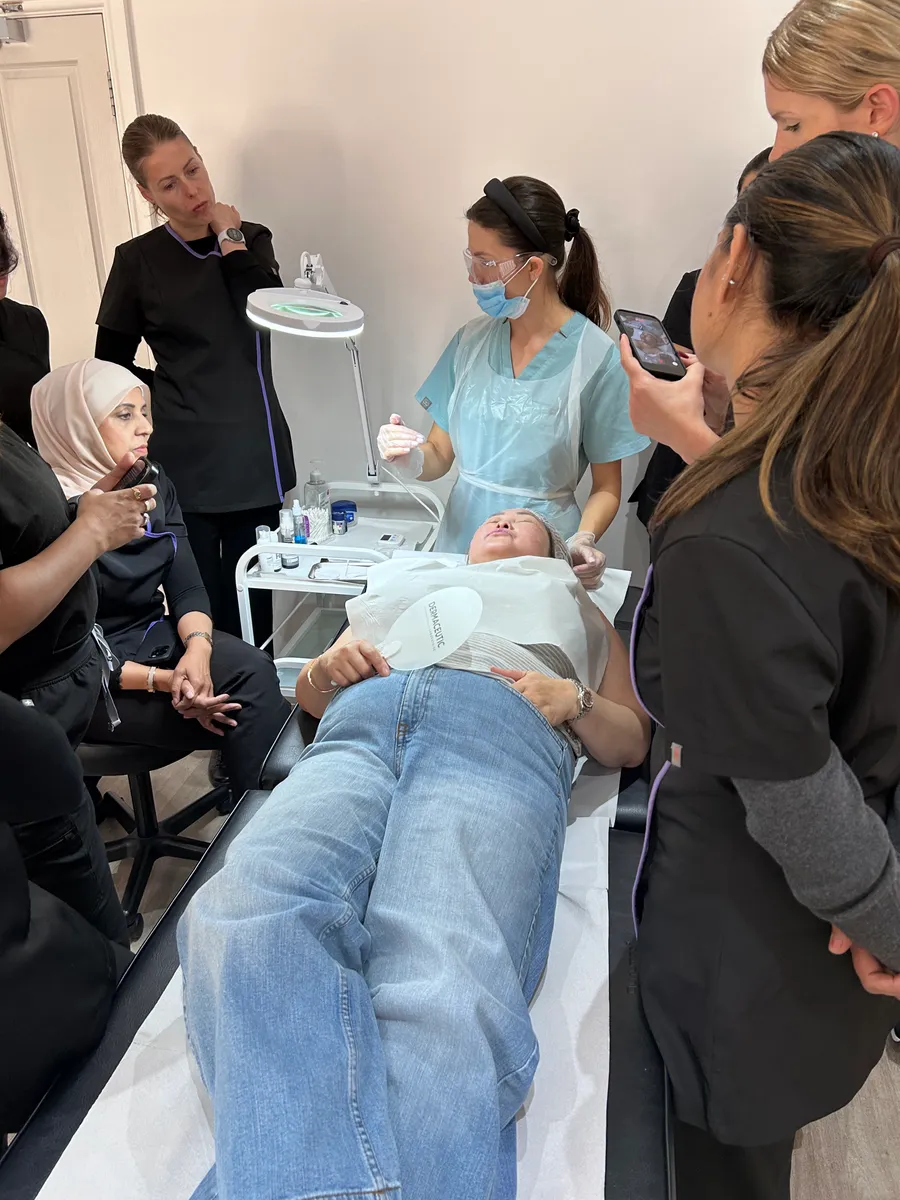
What does a professional skin assessment involve?
The detail depends on the treatment and the practitioner’s qualification. A useful way for a learner to understand the process is through four stages:
- Consultation: establish the client’s concerns and expectations, relevant health and treatment history, skincare routine and any previous reactions.
- Observation: assess the skin using the methods taught on the course, with appropriate lighting and equipment where relevant.
- Suitability: consider contraindications, treatment limitations and whether advice or referral is needed before proceeding.
- Planning and records: explain suitable options, obtain the required consent, record the agreed plan and provide relevant aftercare.
Consider the oily-skin example at the start of this article. If a client also reports stinging after a new product, that information needs attention before choosing a facial. The purpose of assessment is to investigate suitability within your professional scope, not to assume that every concern can be solved by a stronger treatment.
Where can you learn skin analysis at Ray Cochrane?
Skin analysis is relevant to more than one qualification. The right course depends on your existing training and the treatments you want to offer. These are different study options, not a compulsory sequence that every learner must follow.
Level 2 Facial and Skincare: a practical facial foundation
Our VTCT Level 2 Facial and Skincare Course is designed for beginners with no previous beauty experience. It combines online theory with supervised academy practice in skin analysis, cleansing, exfoliation, facial massage, masks and client care.
This is an option to consider if your immediate aim is to learn professional facial treatments.
Level 3 Access to Aesthetics: skin assessment within a broader foundation
Our Level 3 Access to Aesthetics course is also a beginner route. It brings skin analysis and facial skincare together with consultation, anatomy, physiology and pathology, electrical science, and health and safety.
The official VTCT Skills (ITEC) qualification documents include UBT285, Skin Analysis and Facial Skincare. This is a Level 2 unit within the Level 3 qualification. You do not need to complete our separate Level 2 Facial course first.
For someone planning a future in aesthetics, it offers a foundation for further study. It does not qualify a beginner to perform advanced treatments such as chemical peels or skin needling.
Level 4 Advanced Aesthetic Therapies: developing dermatological understanding
The Level 4 Advanced Aesthetic Therapies course includes dermatological science and consultative techniques alongside skin needling and superficial chemical peels.
To see how consultation, skin assessment and treatment records fit into practical training, read our guide to how skin analysis is assessed during Level 4 training.
This is for learners with suitable prior qualifications. The academy requires an Ofqual-regulated Level 3 beauty or aesthetics qualification, with medical and overseas qualifications assessed individually by the academy. Admissions can check your certificates before you book.
Course eligibility and permission to practise are separate questions. Before offering treatments, check that your qualifications, professional scope and insurance cover the work you intend to do.
Skin analysis questions from new learners
Is skin analysis only useful before a facial?
No. Consultation and skin assessment also inform suitability and planning in aesthetics. The depth of knowledge and assessment required should match the treatment and your qualification.
Should you repeat skin analysis for a regular client?
Yes. Review their current skin, concerns and relevant history before treatment. Ask about changes since the last appointment rather than assuming the previous plan still applies.
Can skin analysis diagnose acne, rosacea or other conditions?
A beauty practitioner’s assessment is not a substitute for medical diagnosis. Practitioners should recognise the limits of their training and refer concerns that need assessment by an appropriate healthcare professional.
Do I need Level 2 before starting Level 3 Access to Aesthetics?
No. Ray Cochrane’s Level 3 Access to Aesthetics course is a beginner entry route with its own foundation content. The separate Level 2 Facial course is another option, not a required first step. Check the current course page and speak to Admissions about the route that fits your goals.
Choose a course that teaches the reasoning behind treatment
Skin analysis is a skill you return to throughout your career. Start by learning to ask useful questions, observe carefully, keep clear records and work within your competence. As your training develops, the science behind those decisions becomes more detailed.
To discuss the right starting point, explore the course links above or email admission@raycochrane.co.uk with your current qualifications and the treatments you would like to learn.
This article is an educational overview for prospective beauty and aesthetics learners. It is not individual medical advice or a treatment protocol.