This guide compares beauty therapy qualification levels. It explains what Level 2, Level 3 and specialist Level 4 or Level 5 routes are designed to cover, how they differ and where they may lead. If you want the complete beginner career journey instead, read our step-by-step guide to becoming a beauty therapist.
Beauty Therapy Qualification Levels at a Glance
Qualification levels indicate the depth of knowledge, treatment scope and professional responsibility involved. The exact units can vary by qualification, so always check the full specification and entry requirements before enrolling.
| Qualification level | Main purpose | Typical treatment scope | Common next step |
|---|---|---|---|
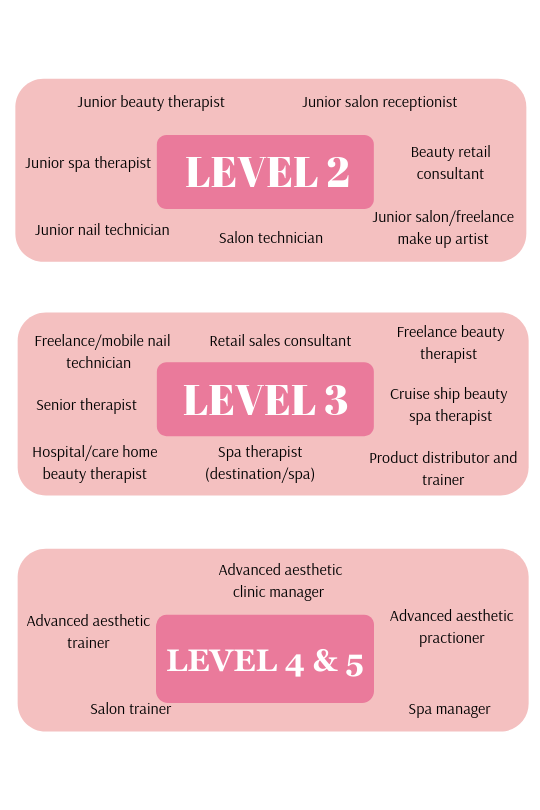
| Level 2 Beauty Therapy | Foundation training | Core salon services such as facials, waxing, manicures, pedicures and lash or brow treatments | Level 3 Beauty Therapy or employment in a junior role |
| Level 3 Beauty Therapy | Advanced salon and spa training | Body massage, facial electrotherapy, body electrotherapy and other advanced beauty treatments | Senior salon or spa work, or an eligible specialist Level 4 route |
| Level 4 specialist qualification | Training in a defined advanced treatment area | For example, laser and IPL or advanced aesthetic therapies, depending on the qualification | Practice within that specialist scope or progress to an eligible Level 5 route |
| Level 5 specialist qualification | Higher-level treatment knowledge and practice | Advanced non-surgical aesthetic procedures within the named qualification | Higher-level specialist practice and further professional development |
Level 2 Beauty Therapy Qualification: Foundation Training
The VTCT Level 2 Beauty Therapy course provides a foundation in commercial salon treatments. Typical subject areas include:
- facials, skincare and basic skin analysis;
- waxing;
- manicure and pedicure;
- lash and brow treatments;
- client consultation, health, safety and hygiene.
This level can support junior roles in salons, spas, beauty retail or self-employed settings, subject to the requirements of the employer, insurer and services offered.
Level 3 Beauty Therapy Qualification: Advanced Salon and Spa Skills
The VTCT Level 3 Beauty Therapy course builds on Level 2 and broadens the treatment scope. Typical areas include:
- anatomy and physiology;
- body massage;
- facial electrotherapy;
- body electrotherapy;
- advanced consultation, treatment planning and safe practice.
Level 3 can support progression into more senior salon or spa roles. It may also provide part of the foundation required for selected advanced qualifications, but eligibility depends on the precise certificate and units held.
Level 4 Specialist Qualifications
Level 4 is specialist progression, not a replacement for Level 2 or Level 3. Each Level 4 qualification has its own treatment scope and entry requirements.
For example, the VTCT Level 4 Laser and IPL course focuses on laser hair removal and skin rejuvenation, including consultation, contraindications, treatment planning and safe use of light-based equipment.
The VTCT Level 4 Advanced Aesthetic Therapies course is a separate specialist route covering advanced skin-rejuvenation practice. Applicants should check that their existing Level 3 qualification meets the course and insurer entry requirements.
How Beauty Therapy and Aesthetics Progression Fit Together
Beauty therapy and aesthetics are connected, but the terms should not be treated as identical qualifications. Beauty therapy can provide valuable knowledge of skin, consultation and practical client care. Aesthetic qualifications then develop a defined advanced treatment scope.
A learner’s progression may move from an eligible Level 3 route into Level 4 specialist training and, where entry requirements are met, into the VTCT Level 5 Non-Surgical Aesthetic Procedures course. The correct route depends on the exact certificates already held, not simply the words “beauty” or “aesthetics” in a course title.
Which Beauty Therapy Qualification Should You Choose?
- Choose Level 2 if you need foundation training for core salon treatments.
- Progress to Level 3 if you want a broader range of advanced beauty, massage and electrotherapy skills.
- Choose a relevant Level 4 specialist qualification only when it matches the treatments you intend to perform and you meet its entry requirements.
- Consider an eligible Level 5 specialist route when you already hold the required foundation and Level 4 knowledge.
If you are starting with no previous qualifications and want a full career sequence, use our beauty therapist pathway guide.
Check the Qualification, Not Just the Course Title
Before enrolling, confirm:
- the full qualification title and awarding organisation;
- the units included in your existing certificates;
- the treatments you want to offer after training;
- the entry requirements for the next qualification;
- the requirements of your insurer, employer and local authority where applicable.
This is especially important when moving from beauty therapy into laser or non-surgical aesthetics, because similarly named courses do not always contain the same units.
Studying Beauty and Aesthetics Qualifications at Ray Cochrane
Ray Cochrane Academy has delivered professional beauty education since 1954. Our current academy is located at 75 Baker Street in central London, and our course pages show the qualification scope, entry requirements, practical training and available study dates for each route.
For advice based on the certificates you already hold, call 0207 486 6291 or email admission@raycochrane.co.uk.