When you plan for a Level 4 aesthetics course, the training dates are only part of the picture. You'll also want to know how your practical work is assessed, whether you'll sit exams and what goes into a portfolio.
For the VTCT Skills Level 4 Certificate in Advanced Aesthetic Therapies for Skin Rejuvenation, you complete theory examinations, written assignments and observed practical work. Attending the training gives you time to learn and practise; the assessments are where you demonstrate the knowledge and skills needed to qualify.
At Ray Cochrane, this qualification is offered through our Level 4 Advanced Aesthetic Therapies course, covering microneedling and superficial chemical peels. This guide focuses on that course. Other Level 4 qualifications, including laser and IPL, can have different assessment requirements.
How will I be assessed?
You'll combine online learning with training and assessment at the academy. There are three forms of assessment:
| Assessment | What it involves |
|---|---|
| Theory examinations | Multiple-choice questions set and marked by VTCT Skills. |
| Short Answer Response assignments | Written work set by VTCT Skills and marked at the academy. |
| Practical observations | An assessor watches your practical work and checks it against the required criteria. |
VTCT Skills sets out the requirements in its qualification specification. The theory examination pass mark is 70%. Practical work is assessed against the required criteria, so that percentage does not apply to your practical performance. You need to pass every required component to gain the qualification.
What is the theory work about?
You'll study professional practice and ethics, consultation and dermatological science, alongside the knowledge behind the two treatments. These subjects help you understand the decisions you make throughout a client appointment, from the initial consultation to aftercare.
Try closing your notes and explaining a topic aloud. If you remember a term but can't explain how it affects your work, you've found something to revisit with your tutor.
For example, consider how information gathered during a consultation could affect a treatment plan. This is a revision exercise rather than an official exam question. Our guide to skin analysis explains why understanding the skin matters alongside learning a treatment technique.
The Short Answer Response assignments are separate from the theory examinations. For these, work from each task's instructions and explain your understanding in your own words. If you're unsure what a question means, check with your tutor before you start writing.
What does practical assessment involve?
Your assessor watches how you handle the whole appointment as well as the treatment itself. That includes the consultation, preparation and safe working, how you communicate with the client, and the aftercare and records you provide. Our assessment overview explains the practical skills and professional behaviour assessed.
At Ray Cochrane, you complete at least four supervised practice treatments, which we call case studies, before four separate practical assessments in each treatment:
| Treatment | Practice case studies | Practical assessments |
|---|---|---|
| Superficial chemical peels | 4 | 4 |
| Microneedling | 4 | 4 |
That's at least 16 treatments in total: eight during supervised practice and eight during practical assessment. You have time to work on your technique and use your tutor's feedback before demonstrating your skills in the assessments.
The practice case studies are part of our academy's training arrangement. The treatment-unit specifications require at least four assessed practical observations for each treatment. These counts refer to treatments, not separate attendance days or different models. Your tutor will explain how the work fits into the timetable and the required treatment ranges.
When you're concentrating on a new technique, it's easy to give less attention to the conversation around it. During supervised practice, notice how clearly you explain the proposed treatment and aftercare. Check that you've understood the information your client has given you, too.
Use these points to guide a discussion with your tutor during practice. For assessment and treatment instructions, follow the formal criteria and your tutor's guidance.
Learning from your tutor's feedback
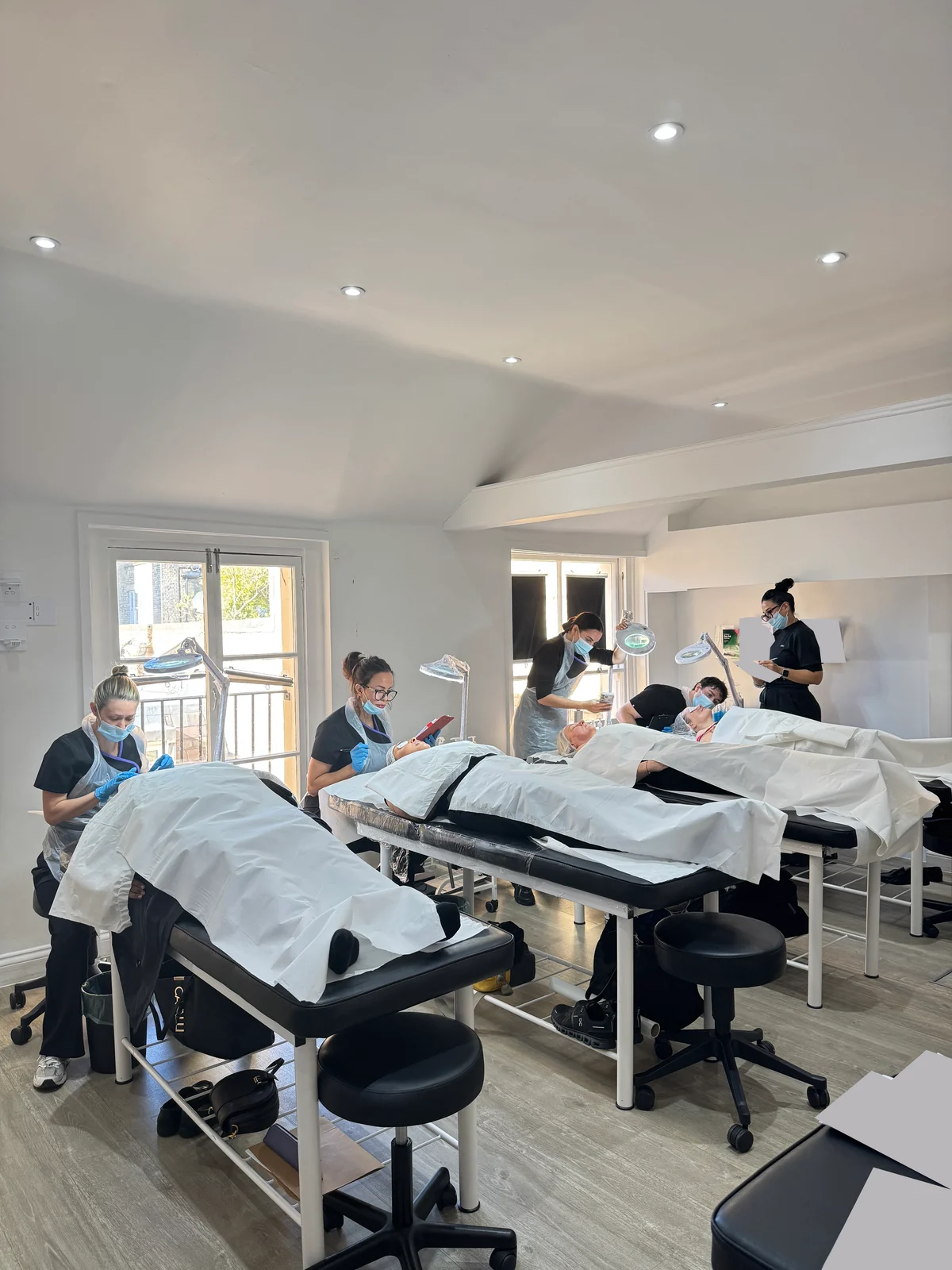
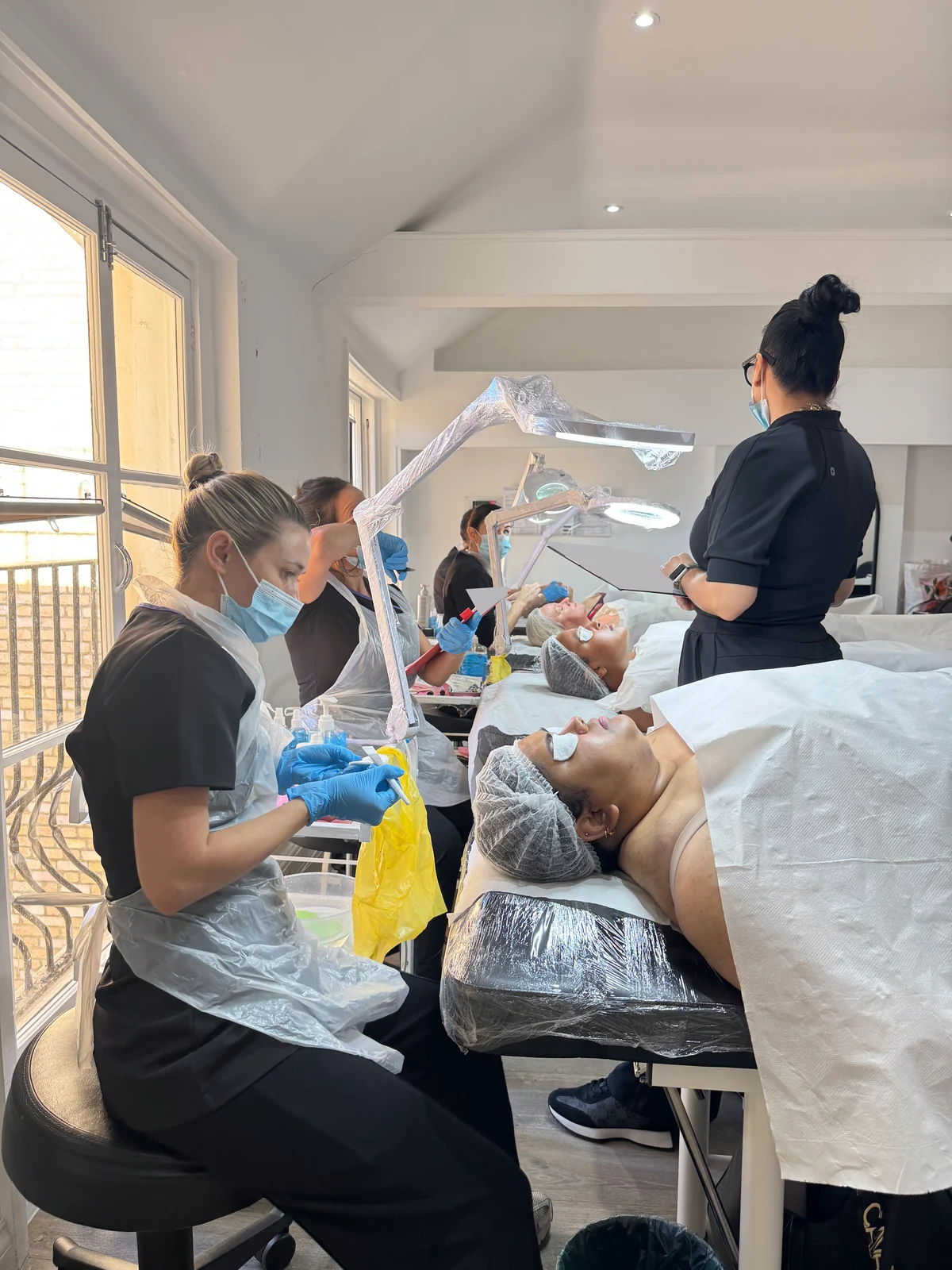
The photographs in this article come from a Level 4 assessment session at Ray Cochrane on 17 October 2026. Tutor Krisztina observed students' practical work and gave feedback. You can see students carrying out treatments on models and working with their consultation and treatment record forms.
After your tutor gives you feedback, write down one point to work on before your next supervised practice session. If a comment isn't clear, ask them to explain it while you can still remember the appointment. You should leave the conversation knowing what to practise next.
These learning notes are for your own preparation, so keep them separate from confidential client records. They don't replace assessment evidence. Your tutor can explain how and when to show that you've addressed a point. Receiving feedback helps you prepare, but it doesn't by itself confirm a pass.
What goes into a treatment portfolio?
You'll complete a portfolio under lecturer supervision for each treatment unit. The official skin-needling unit and superficial chemical-peeling unit explain which evidence you need to include.
Your portfolio records the consultation and skin assessment, the treatment you carried out and your evaluation afterwards. It also includes visual records and the advice you gave the client. Someone reading it should be able to follow the appointment and understand why you made those decisions.
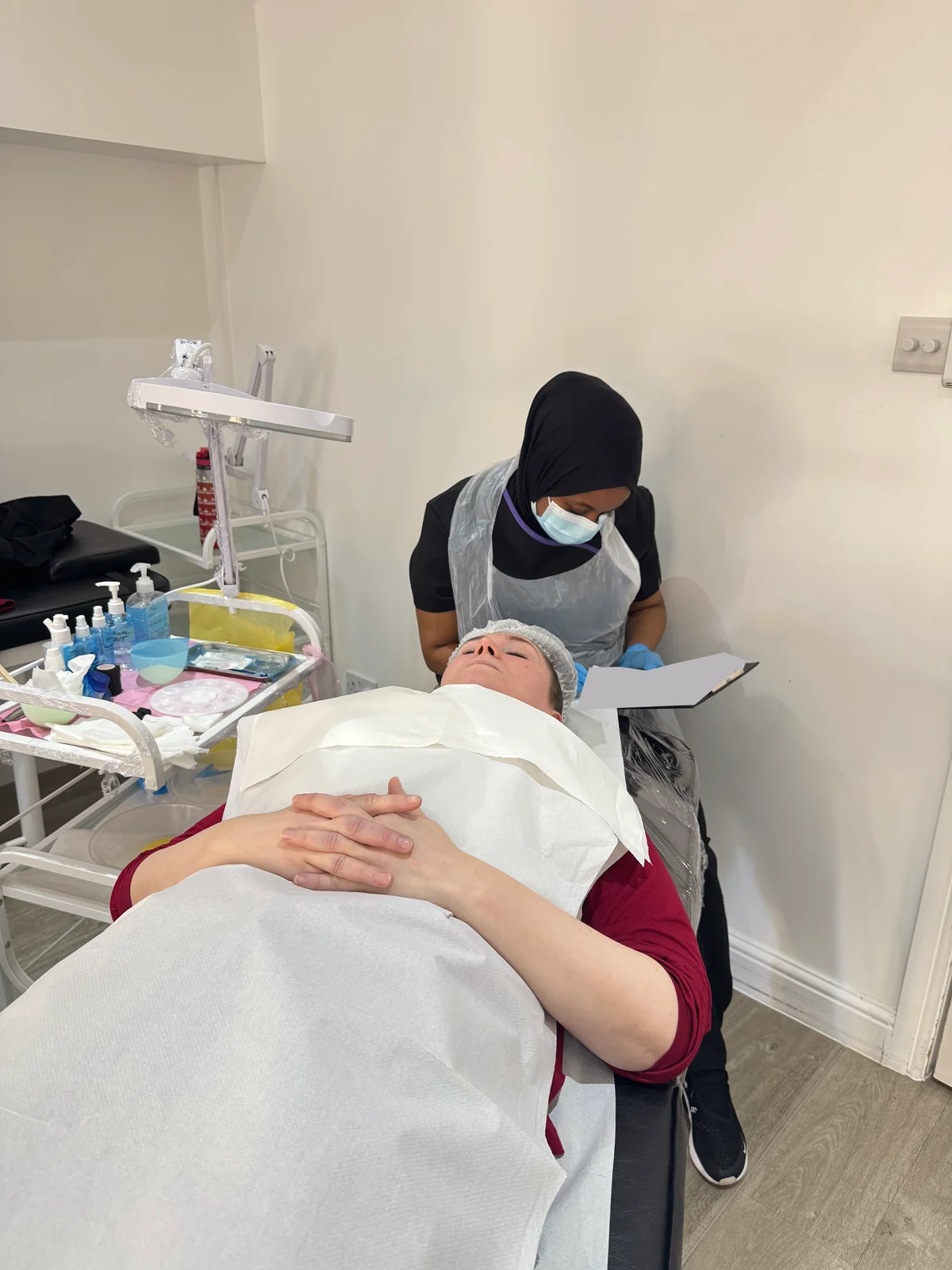
Before you start collecting evidence, check which documents to use and when they're due. Confirm how to organise and submit the work, and how models are arranged. Reviewing your evidence as you go gives you time to deal with any gaps before submission.
Client information and photographs need to stay within the academy's approved arrangements. Confidential treatment records don't belong in personal study notes. Permission to take a photograph for assessment also doesn't automatically include permission to share it on social media.
What can I learn between weekly sessions?
Weekly attendance gives you time to follow what happens after a treatment. When a suitable model returns during the course, you can compare observations, discuss their aftercare experience and review how their skin has recovered with your tutor.
Students may also practise on one another where suitability checks and consent allow. If you take part as a model, you can experience the recovery period firsthand. Noticing how your skin responds over the following days can make aftercare advice easier to understand and explain to future clients.
Weekly classes do not mean treating the same person every week. Your tutor plans treatments around the skin assessment, recovery and the appropriate intervals for that treatment. Following the recovery process helps you connect what you learn in class with what a client experiences afterwards.
How can I prepare between academy days?
When you choose an intake, allow time for the online learning and written work as well as academy attendance. The study time you'll need depends on the work set and what you already know. Admissions can discuss that commitment with you before you book.
At the end of a study session, jot down what you can now explain and what still needs an answer. Take your unanswered questions to the next lesson. That way, you have something specific to discuss instead of trying to remember where you got stuck.
If you're unsure whether work from a practice session counts towards assessment, check with your tutor at the time. You'll then know whether you have the evidence you need or still have work to complete.
What if I need more time or another attempt?
VTCT Skills allows external theory examination retakes after further teaching and study. The academy can explain how to arrange one, including any charges and deadlines. Practical reassessment needs a separate conversation, as the arrangements may differ.
If you need assessment support, tell us early, ideally before enrolment. We can discuss the process and any supporting evidence you may need to provide. Any particular adjustment still needs to be considered and agreed.
Questions worth asking before you enrol
Before you book, these questions are worth discussing alongside the course dates and entry requirements:
- When are assessments planned, and what work is expected between academy days?
- How are practical models and portfolio submissions organised?
- How will I receive feedback and find out whether more evidence is needed?
- What happens if I need another attempt, including any fees or deadlines?
Our Level 4 Advanced Aesthetic Therapies course page has the current programme details. If you're considering the course, tell admissions which qualifications you already hold and what you'd like to understand about the study or assessments. We can talk those points through before you decide to enrol.