
A laser hair removal consultation helps establish whether treatment is suitable for the client and what they can realistically expect. If you’re training to become a therapist, you need to understand how the information you gather affects the treatment plan.
When you’re comparing laser courses, it’s natural to focus on the equipment you’ll use. But you also need to learn what to do when a client mentions a sunny holiday, starts a new medicine or expects a result the treatment can’t deliver.
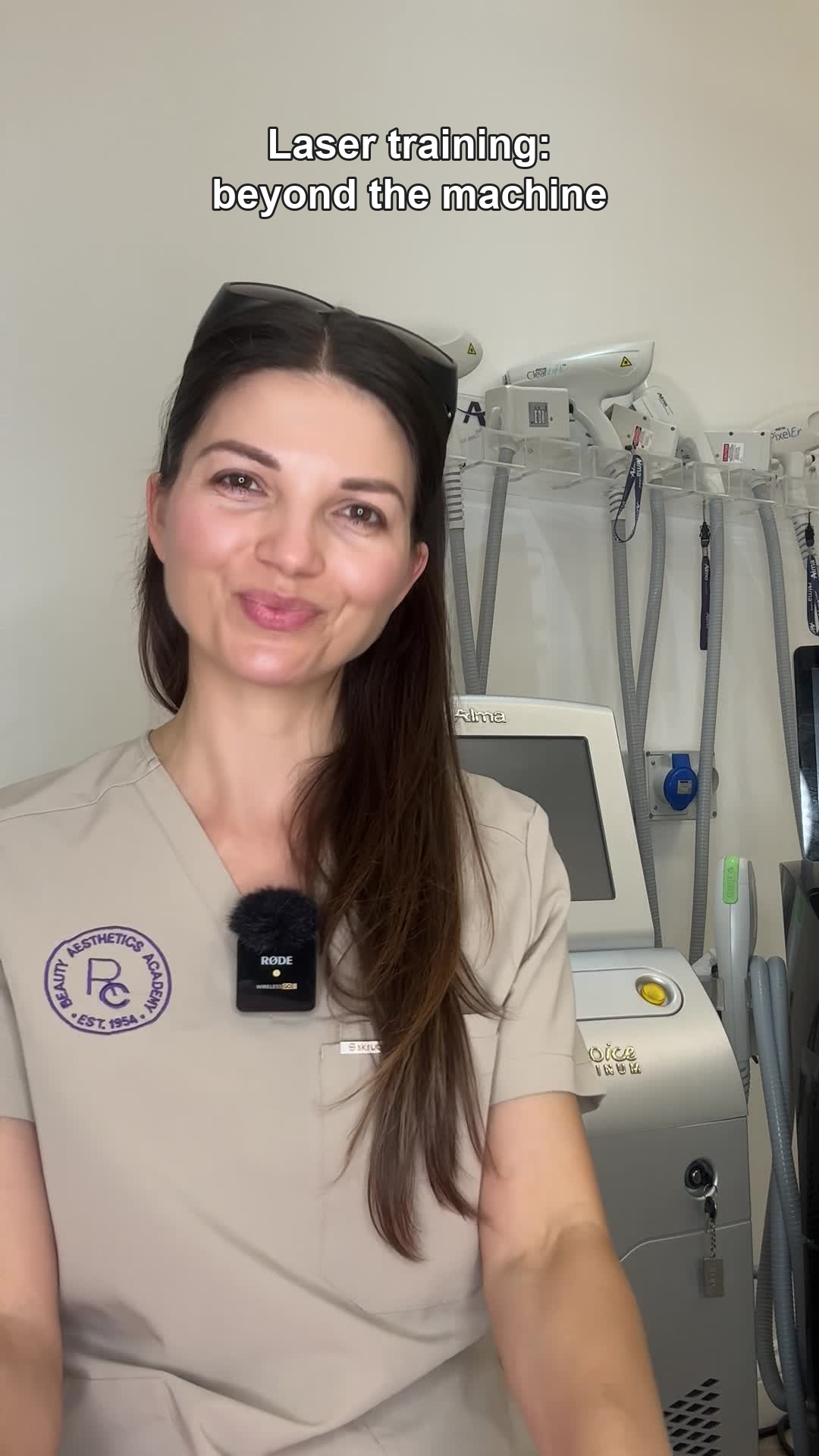
Watch Eleonora explain the decisions behind laser treatment
In this short video, Eleonora explains the approach behind the academy’s Level 4 laser and IPL teaching:
"Is this client suitable for the treatment? What do their skin and hair characteristics tell us so we can plan accordingly? What expectations should we discuss first?"
As you learn to consult, try explaining why you need each answer and how it could affect the plan.
What should a laser hair removal consultation cover?
The consultation starts with what the client wants help with. You’ll need to review relevant health information and examine the area they want treated. They also need to understand the likely results and risks, any alternatives, and what they’ll need to do before and after treatment.
The American Academy of Dermatology’s consultation guidance identifies recent tanning, medication and a history of unusual scarring among the information clients should disclose. It also explains why hair characteristics and the treatment area matter.
During supervised practice, follow up on the answers rather than simply recording them. If someone lists a medicine on their form, you need to check what it means for the proposed treatment. Work from the appropriate treatment protocol and ask your tutor or clinical lead if you’re unsure. Never advise a client to stop prescribed medication to make a treatment possible.
A form helps you organise the consultation. It cannot interpret the answers for you.
Why do skin and hair characteristics matter?
Two clients asking for the same treatment may need different advice. Hair colour and thickness, the treatment area, skin colour and the laser used can all affect results, as the American Academy of Dermatology explains.
During training, practise describing what you can see and explaining how it affects your plan. A skin-type label alone won’t tell you everything about the skin in front of you that day.
For example, you need to account for recent tanning as well as the client’s usual skin characteristics. Don’t make assumptions based on their appearance or background.
When you explain your plan to a tutor, refer back to what you know about skin and hair. That helps them check your understanding, rather than hearing a setting or phrase you’ve memorised.
Discuss expectations before agreeing a treatment plan
Ask what the client hopes will change. Are they expecting less frequent shaving, a reduction in unwanted hair, or an outcome they have seen in someone else’s photographs?
Laser hair removal usually involves a series of treatments, and some people need maintenance. Results vary. A practitioner should explain this without promising a fixed outcome or using another client’s result as a guarantee. The AAD’s guidance on results and maintenance is useful background reading.
Practise explaining the limitations, too. It can feel uncomfortable to tell someone that the treatment is unlikely to give them the result they want. They need that honest answer before deciding whether to go ahead.
A teaching example: what if the client has recently been in the sun?
This is an illustrative learning scenario, not a report of a real client or a treatment instruction.
Imagine a returning client says, "I had treatment before and it was fine," then mentions a recent sunny holiday.
A useful tutor question would be: "What has changed since the last appointment, and what do you need to check before deciding whether to proceed?"
You would need to ask about the exposure, assess the skin with your tutor and follow the relevant protocol. Having had treatment before isn’t enough to decide whether to proceed today. You may need to postpone the appointment or seek further advice.
Practise how you would explain that decision to the client. Give them a clear reason for the change of plan and time to ask questions, so they don’t feel that you’ve simply dismissed their request.
Is a patch test the same as a consultation?
No. The consultation looks at whether treatment is suitable for the client. A laser or IPL test patch checks how a small area of skin responds to the proposed treatment. It doesn’t replace the consultation or guarantee that a later treatment will be risk-free.
The British Medical Laser Association’s treatment guidance addresses assessment, test patches and reviewing changes before subsequent treatments. Students should follow their supervised training and the applicable device and treatment protocols. There is no universal waiting time or setting to copy from a blog.
What should you write in the consultation record?
Someone authorised to read your record should be able to understand the appointment without having been there. Write down the relevant findings, the advice you gave and the agreed plan. If you postpone treatment or refer the client, explain why.
If you write "client suitable", can you explain which information led you to that decision? Include that reasoning in the record. Your tutor can then discuss it with you and help you work through anything you’ve missed.
Give clients time to ask questions and understand the proposed treatment before they consent. Check for changes at later appointments and update their records. The BMLA guidance covers consent and reviewing changes before further treatment.
Use the academy’s approved forms and protect the personal information they contain. Follow the approved privacy arrangements when including consultation records in a portfolio. Permission to use a record for assessment doesn’t automatically allow you to share it on social media.
How does this fit into Level 4 laser training?
At Ray Cochrane Beauty Aesthetics Academy, you’ll combine online theory with supervised academy training. You’ll study consultation, skin and hair analysis, treatment planning, record keeping and aftercare alongside the practical laser and IPL skills.
The aim, as Eleonora explains in the video, is for you to understand the decisions behind a treatment plan as well as how to operate the equipment.
If you are comparing courses, ask how tutors observe consultations and help students explain their decisions. Our guide to choosing a laser-training provider covers the wider questions to ask about qualifications, supervision and assessment.
Considering laser training?
Explore our Level 4 Laser and IPL course in London for the current course structure and entry requirements.
If you are starting without a beauty or aesthetics qualification, our beginner’s route to becoming a laser hair removal therapist explains the earlier training stages. Admissions can check your existing certificates before you enrol.
This article explains training principles. It is not a treatment protocol or a substitute for supervised training, device instructions or individual professional advice.